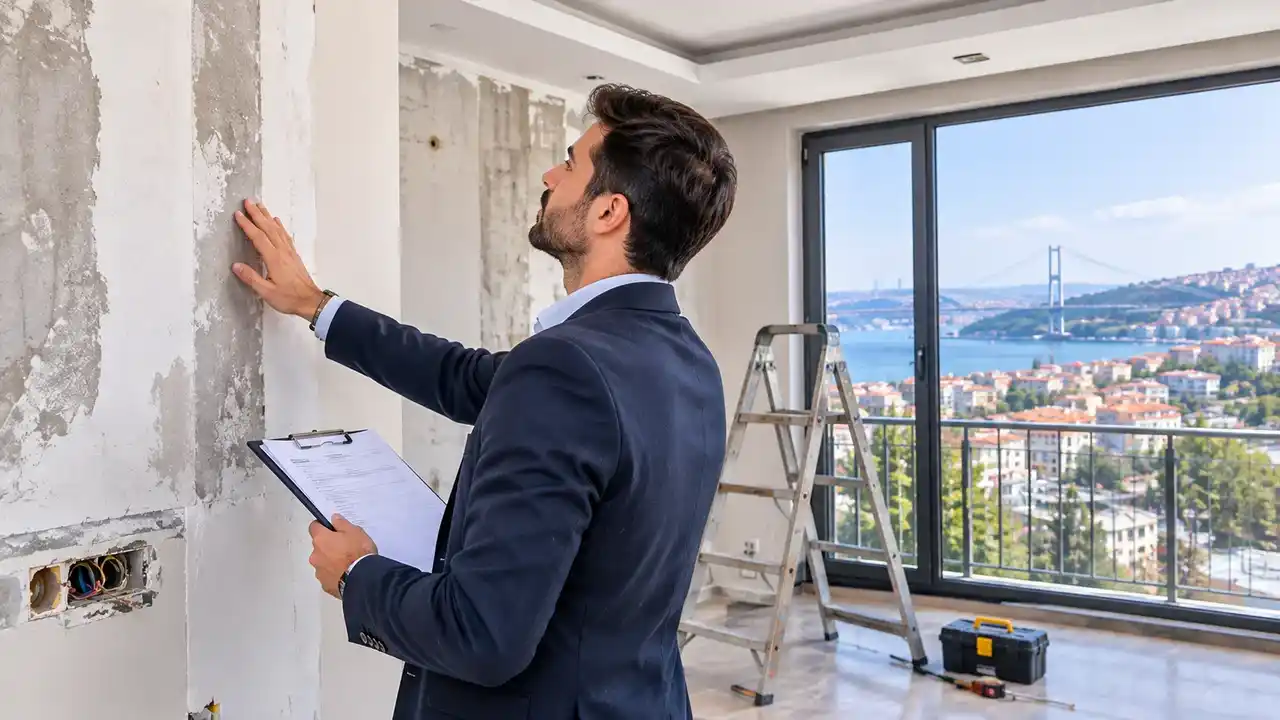
Inspecting previous renovations when buying property in Turkey is an essential step in protecting buyers from structural and legal problems, as well as unexpected costs that may arise after the purchase has been completed.
A beautiful exterior appearance of an apartment or building does not necessarily mean that its structure is sound or that previous renovation work was carried out to a high standard. Fresh paint and modern finishes may conceal structural cracks, water leaks, or alterations that do not comply with approved architectural and engineering plans.
Property inspections before purchase in Turkey should not be limited to checking finishes. They should also cover the property's renovation history, structural elements, and official permits. Inspecting apartments helps identify defects that may affect the property's value and future safety.
This article reviews the stages of technical property inspections, the assessment of renovations, the inspection of structural alterations, the verification of building violations, and the criteria for choosing an engineer to prepare a technical report before purchase.
Why Is It Important to Inspect Previous Renovations When Buying Property in Turkey?
Buying a renovated property requires particular attention, as the work may be cosmetic or may involve essential elements such as columns, walls, ceilings, and water and electrical systems. Previous renovations in Turkey should therefore be inspected to ensure the building's safety.
Inspecting a Property Before Purchase in Turkey and Determining Its Actual Condition
The initial inspection aims to assess the property and examine its walls, ceilings, and floors, while identifying defects in the finishes. The main points include:
- Identifying areas that have previously undergone renovation or refurbishment.
- Checking for differences in paint colors or the thickness of putty layers.
- Ensuring that no cracks are concealed behind finishing materials.
- Inspecting floors for settlement or unevenness.
- Reviewing the condition of ceilings and walls to identify signs of water leaks.
- Checking the quality of materials used in previous repairs.
Inspecting Apartments Before Purchase in Turkey
Residential apartments require a comprehensive inspection covering both the interior elements and the building's shared systems, as some problems may not be clearly visible when examining the individual unit alone.
For example, an apartment may have been completely renovated while the building suffers from problems with waterproofing, drainage systems, or the exterior façade. Therefore, shared areas such as staircases, elevators, rooftops, and basements should be inspected alongside the apartment itself.
Why Is Recent Renovation Not Enough to Determine Whether a Property Is Safe?
Quick renovation work may improve a property's appearance without addressing the actual cause of a problem. Painting a wall damaged by moisture does not stop the water leak from continuing, just as covering cracks with putty does not necessarily resolve the reasons behind their appearance.
It is therefore important to distinguish between cosmetic repairs and technical repairs that address the source of the defect, ensure that the solution remains effective, reduce the recurrence of defects, and limit the emergence of future structural or operational problems.
Discover how to verify the legality of a property in Turkey before purchase, and avoid the risks of building violations, unlicensed alterations, and legal problems that could threaten your investment through clear, well-planned, and secure steps.
Technical Property Inspections in Turkey and Identifying Structural Defects
Technical property inspections in Turkey are an important procedure for assessing a building's condition before signing a sales contract. They are preferably carried out by a structural engineer or a qualified team, particularly for older buildings or properties that have undergone multiple alterations and renovations.
Assessing a Property's Structural Condition Before Purchase
Structural assessments focus on the elements that bear loads and transfer them to the foundations. The main elements include:
- Reinforced concrete columns: Inspecting cracks, deterioration, signs of moisture, and exposed reinforcement steel.
- Beams: Checking for cracks, deflection, or clear signs of weakness.
- Walls: Distinguishing between load-bearing walls and internal partitions, and examining any alterations made to them.
- Ceilings and slabs: Looking for settlement, cracks, and signs of water leakage.
- Foundations: Reviewing available indications of differential settlement and the condition of the soil and foundations, when specialized testing is required.
A visual inspection does not establish a building's earthquake resistance. Assessing this may require material testing and an engineering analysis in accordance with the applicable standards.
Identifying Cracks and Moisture in Properties
Cracks and moisture require inspection, and their level of risk varies according to their location, nature, and causes. The main warning signs include:
- Diagonal or recurring cracks around doors and windows.
- Cracks extending along columns or beams.
- Moisture stains or salt deposits appearing on walls.
- Peeling paint and swelling plaster layers.
- Musty odors in bathrooms, kitchens, and basements.
- Signs of water leakage on ceilings or shared walls.
The severity of cracks cannot be determined by their appearance alone. It depends on their width, depth, location, direction, and development over time. Testing or a specialized structural inspection may be necessary.
Inspecting Older Buildings in Turkey
Older buildings require greater attention because they may have undergone structural changes, material deterioration, or undocumented maintenance work. The inspection should cover the building's age and structural system, previous damage caused by earthquakes, moisture, or settlement, and any repairs or strengthening work that has been carried out.
It is particularly important to refer to the Turkish Building Earthquake Code (Türkiye Bina Deprem Yönetmeliği 2018), which includes rules for assessing the earthquake performance of existing buildings and requirements for strengthening them.
Learn about the key documents required to buy property in Turkey, how to review the building permit, occupancy permit, and title deed before completing a purchase, and how to avoid delays and legal risks.
Inspecting the Quality of Previous Renovations and Alterations Made to a Property
The risks associated with renovated properties are not limited to visible defects. They also include the quality of the work and its compliance with engineering standards. Previous alterations should therefore be inspected, particularly those affecting the structural framework or the building's essential systems.
Inspecting the Quality of Apartment Renovations in Turkey
Inspecting apartment renovations in Turkey requires determining whether the work has addressed the original problems or merely concealed them. The main assessment elements include:
- Wall repairs: Ensuring that the causes of cracks were addressed before repainting or installing wall coverings.
- Bathroom and kitchen renovations: Inspecting waterproofing, water and drainage systems, and connections.
- Ceiling repairs: Ensuring that there are no leaks or damage to concrete slabs.
- Floor renovations: Checking surface levelness, installation quality, and the absence of abnormal settlement.
- Electrical work: Reviewing connections, distribution boards, circuit breakers, and the safety of electrical wiring.
- Plumbing work: Inspecting pipes, joints, and potential sources of leaks.
It is advisable to request repair invoices, engineering contracts, and warranties to identify the work carried out, the materials used, and the parties responsible for it.
Identifying Construction and Renovation Defects in Properties
Some defects may appear as a result of improperly executed renovation work. The main examples include:
- Using materials that are unsuitable for the surface or surrounding environment.
- Treating cracks without addressing their structural causes or potential structural causes.
- Installing inadequate waterproofing in bathrooms, rooftops, and balconies.
- Changing pipe routes in ways that may lead to future leaks.
- Removing parts of walls without verifying their nature and structural function.
- Installing electrical wiring without considering electrical loads and protection requirements.
The engineer should determine whether the defects are superficial or indicate a deeper problem requiring specialized testing or treatment.
Inspecting Previous Structural Alterations to a Property
Structural alterations are particularly sensitive when buying property. Walls may have been removed, openings enlarged, or rooms combined without assessing the impact of these changes. Buyers should verify the following:
- Has any wall been removed or had its position changed?
- Have door or window openings been modified, and what impact could this have on structural elements?
- Are the columns and beams free from drilling or breaking work?
- Are there additional loads resulting from the construction of extra floors or the installation of additional equipment?
- Are engineering plans available showing the alterations that were carried out?
- Have the necessary approvals been obtained for alterations that require permits?
Load-bearing walls must be distinguished from non-load-bearing walls and other structural elements. A wall's nature must not be determined solely by its appearance or thickness.
Looking for a reliable real estate platform to sell your property quickly and transparently?
EmlakPlatform is not just an option, it is the smart solution for you. We combine advanced technology, full transparency, and professional support

Distinguishing Between Cosmetic Renovation and Structural Strengthening
Renovating a property to improve its appearance is different from strengthening it to address structural weakness. Cosmetic renovation includes painting, flooring, plumbing, and waterproofing, while structural strengthening requires an engineering assessment of load-bearing elements, identification of the causes of weakness, and determination of appropriate treatment methods.
The quality of materials and workmanship should be inspected, and buyers should ensure that cracks or moisture have not been concealed, test plumbing and waterproofing systems, verify the nature of walls before their removal, and review designs, approvals, and test results when columns or beams have been strengthened.
Discover the criteria for choosing a safe property in Turkey, and learn about the importance of structural safety inspections, cracks, moisture, and engineering reports before signing a purchase contract and finalizing your buying decision.
Verifying Building Violations and Permits in Turkey Before Buying Property
It is not enough to confirm the technical quality of renovation work. Buyers must also verify that alterations are legal and comply with approved plans and permits. A property may appear to be in good condition while containing unapproved modifications that could cause legal or financial problems in the future.
Verifying Building Violations in Turkey
This process involves comparing the property's actual condition with the plans approved by the municipality. It is advisable to review the following documents:
- Building Permit (Yapı Ruhsatı): To verify the building's original permit and any alterations that require authorization.
- Building Occupancy Permit (Yapı Kullanma İzin Belgesi / İskân): To confirm that permission to use the building has been issued.
- Architectural Plans (Mimari Proje): To compare the actual layout and spaces with the approved plans.
- Structural Plans (Statik Proje): To examine changes involving columns, beams, and load-bearing elements.
- Alteration Permits (Tadilat Ruhsatı): To verify the legality of modifications that require a permit.
- Violation Records: To determine whether the municipality has recorded any violations or issued decisions concerning the property.
An occupancy permit does not establish the legality of subsequent alterations, and a title deed does not replace the need to verify the property's planning and construction status.
When Do Renovations Require a Permit in Turkey?
Under Article 21 of Turkish Zoning Law No. 3194, alterations to licensed buildings require a new permit, except for minor maintenance and repair work that does not affect load-bearing elements, such as painting, plastering, and repairing electrical and sanitary installations.
Article 59 of the Planned Areas Zoning Regulation (Planlı Alanlar İmar Yönetmeliği) also addresses certain repair and alteration works that do not require a permit, subject to specific conditions.
Regulatory Updates and Permit Requirements for Property Alterations in Turkey
It is important to understand that not requiring a permit does not necessarily mean that work can be carried out without complying with public safety requirements or obtaining shared-ownership approvals when legally required.
Regulatory update: The Planned Areas Zoning Regulation was amended in the Turkish Official Gazette on 1 July 2026, including provisions concerning permits and alterations in existing buildings. Therefore, the current regulations should be checked with the relevant municipality when inspecting alterations, rather than relying on outdated information.
Inspecting a Building's Earthquake Safety
Earthquake safety is an important consideration when buying property in Turkey, given the differences between buildings, their structural systems, construction quality, and soil conditions. The relevant procedures include:
- Reviewing the building's history and any previous earthquake damage.
- Examining previous inspection or strengthening reports, if available.
- Checking for alterations to columns, beams, and load-bearing walls.
- Reviewing the available structural plans.
- Consulting a structural engineer to determine whether additional testing is required.
A distinction must be made between a visual inspection and an earthquake performance assessment. A visual inspection does not prove that a building is earthquake-resistant. An assessment requires testing and analysis in accordance with the 2018 Turkish Building Earthquake Code, carried out by qualified specialists and subject to conditions relating to the applicant's status and ownership.
Learn about earthquake-resistant building design in Turkey, including the main structural safety standards, soil investigations, and methods of strengthening structural elements to protect buildings in accordance with clear, approved engineering standards.
Hiring an Engineer to Inspect a Property Before Purchase and Prepare a Technical Report
Hiring an engineer before buying a property helps buyers make decisions based on technical information rather than the seller's impressions. It is advisable to choose a civil or structural engineer experienced in building and renovation assessments, with specialists available to inspect electrical and mechanical systems and waterproofing when necessary.
Stages of Technical Property Inspections in Turkey
The inspection process can be organized into the following stages:
- Collecting information and documents: Reviewing engineering plans, permits, the occupancy permit, and previous inspection reports.
- On-site inspection: Examining the apartment and building and identifying cracks, moisture, and visible defects.
- Inspecting renovations: Assessing the quality of materials and workmanship and determining whether the repairs have addressed previous problems.
- Technical testing: Conducting moisture, utility-system, concrete, and reinforcement steel tests when necessary.
- Preparing the report: Analyzing the findings and identifying defects, risks, required repairs, and estimated costs.
Property Technical Inspection Report in Turkey
A property technical inspection report in Turkey is a document that helps buyers understand the property's condition before the sale. It is advisable for the report to include:
- The property's details, location, and approximate age.
- The scope of the inspection and the tests carried out.
- A description of the structural condition of the elements that could be inspected.
- The results of crack, moisture, and water leakage inspections.
- An assessment of the quality of previous renovations and repairs.
- Identification of visible structural alterations and observations regarding their compliance with the plans.
- The results of reviewing the available documents and permits.
- Defects requiring urgent repairs.
- Technical recommendations and any additional procedures required.
- Estimated repair costs when sufficient information is available.
The report should clearly state the limitations of the inspection and identify concealed elements. A visual inspection must not be treated as a substitute for an official earthquake performance assessment.
How Can You Use the Report Before Making a Purchase Decision?
The report can help buyers negotiate the price, request that defects be repaired before the sale, and determine a maintenance budget. Problems can be classified into three categories:
- Minor defects: Such as damage to certain finishes or the need for repainting.
- Moderate defects: Such as water leaks, waterproofing problems, or utility-system issues that require treatment.
- Major defects: Such as damage to load-bearing elements or unapproved alterations, which require an engineering assessment before purchase.
If structural risks or major violations are identified, it is preferable to postpone the purchase until their potential legal and technical resolution has been verified.
Discover the importance of inspecting thermal insulation in Turkish apartments before purchase, and learn how to assess insulation quality, identify moisture and heat-loss problems, estimate treatment costs, and reduce future maintenance expenses.
Comprehensive Checklist for Inspecting Previous Renovations When Buying Property in Turkey
| Inspection Element | Potential Problems | Verification Method |
| Reinforced concrete columns | Cracks, corrosion, and exposed reinforcement | Engineering inspection and testing when necessary |
| Beams and ceilings | Deflection, cracks, and leaks | Structural inspection |
| Internal walls | Wall removal or poorly assessed alterations | Comparing the plans with the actual property |
| Paint and finishes | Concealed cracks and moisture | Inspecting the finishing layers |
| Bathrooms and kitchens | Water leaks and inadequate waterproofing | Testing water systems and waterproofing |
| Floors | Settlement and unevenness | Measurements and visual inspection |
| Electrical wiring | Unsafe connections and excessive loads | Electrical inspection |
| Drainage systems | Blockages and leaks | Testing pipes and connections |
| Rooftops and balconies | Waterproofing damage and rainwater leaks | Inspecting waterproofing and drainage outlets |
| Structural alterations | Removal or modification of load-bearing elements | Reviewing plans and permits |
| Municipal permits | Building violations and unauthorized alterations | Reviewing records with the relevant municipality |
| Earthquake safety | Inadequate structural performance | Specialized engineering analysis |
Frequently Asked Questions About Inspecting Previous Renovations When Buying Property in Turkey
Some renovation work may conceal structural defects, water leaks, or problems with insulation and utility installations. An inspection helps assess the quality of previous repairs and identify potential risks and costs before completing the purchase.
An inspection involves examining the walls, ceilings, floors, windows, bathrooms, and kitchens, and checking for cracks, dampness, or leaks. It also includes reviewing previous modifications and engineering plans, and consulting a specialist engineer when necessary.
Yes, indications of unauthorized modifications can be identified by comparing the property's actual condition with the approved plans and checking modification permits with the municipality. Any alteration affecting load-bearing elements must be assessed by a structural engineer.
Not necessarily. A standard technical inspection report may reveal defects and indicators that require further examination, but it is not a substitute for a seismic performance analysis in accordance with Turkey's 2018 Earthquake Code, which requires specialized engineering tests and analyses.
Important documents include the title deed (Tapu), building permit (Yapı Ruhsatı), occupancy permit (İskân), architectural and structural plans, and modification permits where required. They also include inspection and structural reinforcement reports, as well as invoices for previous renovation work, if available.
Conclusion: Inspecting Previous Renovations When Buying Property in Turkey Is an Essential Step in Protecting Your Investment
Inspecting previous renovations when buying property in Turkey is not merely an additional procedure. It is an essential and highly important step in reducing the technical, legal, and financial risks associated with property ownership.
Ensuring that a building is safe requires combining an engineering inspection, an assessment of the quality of previous repairs, the identification of cracks and moisture, and a review of structural alterations and official permits.
Furthermore, having a qualified engineer inspect a property before purchase in Turkey helps identify defects that may not be visible during a conventional viewing. It also gives buyers a clearer understanding of the property's structural condition and the potential costs of repairs and maintenance.
Therefore, preparing a property technical inspection report in Turkey before completing the transaction is an important way to make an informed purchasing decision, avoid costly surprises, and preserve the property's value and safe use over the long term.