Iznik: Capital of History, Cradle of Christianity, and Icon of Ottoman Ceramics
İznik combines the majesty of history with the charm of nature and the tranquility of the countryside. It is not merely a transient tourist destination, but an open history book where every corner reveals a chapter in humanity's journey, and in the clay of its pottery, you can sense the spirit of authentic art.
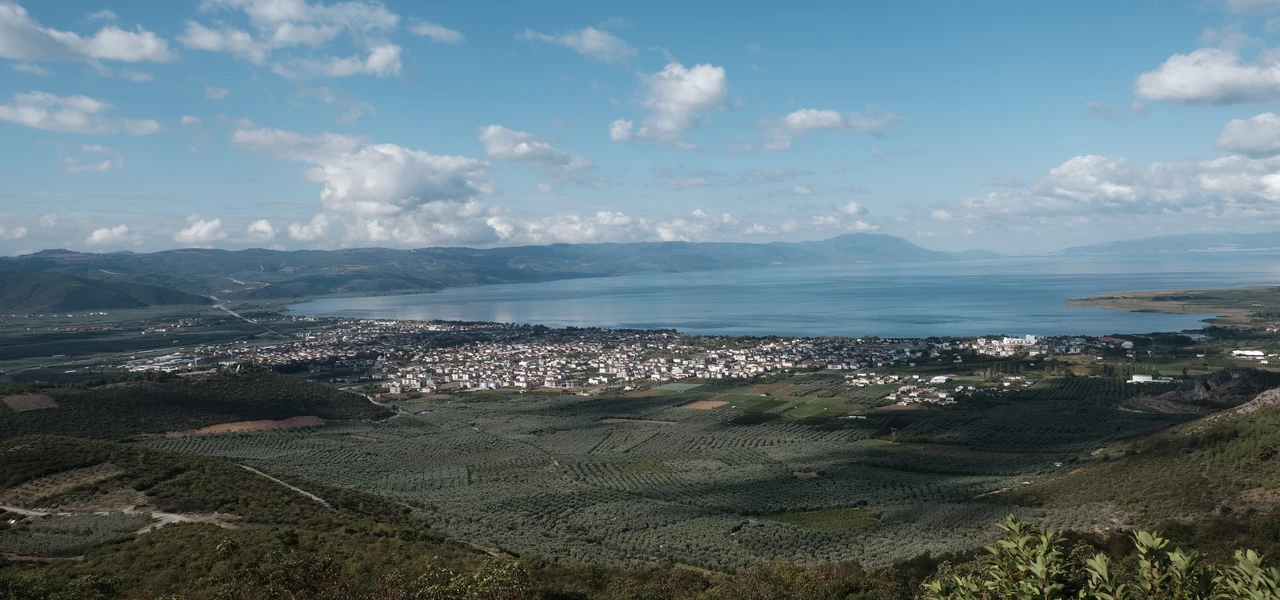
In the northeast of Turkey's Bursa province, on the eastern shores of the lake that bears its name, lies the city of Iznik (İznik), a living witness to the succession of civilizations. This city, small in area (753 km²) and population (approximately 44,000 inhabitants), encapsulates in its alleyways a history spanning over 4,500 years, making it one of the most important historical and religious centers in the world.
Roots and Naming: From Greek "Nicaea" to Turkish "Iznik"
The first traces of human settlement in Iznik date back to 2500 BC. It was formerly known as "Helikare," but the major turning point was in 316 BC when the Macedonian commander Antigonus founded it and built a city he named "Antigonia."
After his defeat by the commander Lysimachus, the latter named the city after his wife, Nicaea (daughter of Commander Antipater). In Greek mythology, it is said that the god of wine, Dionysus, fell in love with a nymph named Nicaea who lived in Lake Ascania (the ancient name of Iznik Lake), so he founded the city in her honor and granted her highly fertile vineyards.
The current name "Iznik" came from a common linguistic transformation rule in the Byzantine era, where a Greek prefix meaning "within the walls" (Is) was added to the original name "Nicaea," eventually transforming into "Iznik" in the Turkish language over time.
Religious and Historical Significance: Capital of Empires and Holy Councils
Iznik was not just an ordinary city; it was a political and religious hub whose decisions shook the world:
- Cradle of Christian Doctrine: In the summer of 325 AD, the city witnessed an event that changed the course of Christian history: the First Council of Nicaea, attended by Emperor Constantine the Great, where the Nicene Creed was formulated and fundamental laws were defined. In 787 AD, the Seventh Ecumenical Council was held there in the historic Hagia Sophia Church.
- The Most Prominent Contemporary Event: As an extension of this religious status, on November 27, 2025, Iznik witnessed a historic event: a joint mass celebrated by Pope Francis (represented by Pope Leo XIV according to historical updates) and Ecumenical Patriarch Bartholomew I, commemorating the 1700th anniversary of the First Council, on a platform near the submerged remains of the Basilica of "Aya Neophytos."
- Political Turmoil and Wars: Iznik was the capital of the Bithynian Kingdom, then an important Roman city, and the capital of the Seljuk Sultanate (1075-1086 AD). After the fall of Constantinople to the Crusaders during the Fourth Crusade, the Byzantine Empire of Nicaea was established there, which later managed to reclaim Constantinople. In 1331 AD, the Ottomans conquered it, transforming it into a prominent Islamic cultural and intellectual center, rich with scholars and mystics such as "Dawud al-Qaysari."
The Art of Clay and Glaze: Iznik Çinisi
Iznik is considered the spiritual capital of pottery and tile (çini) production in Ottoman history. From the mid-15th century, this art developed, reaching its peak in the 16th century when Iznik tile masterpieces adorned the most famous works of the architect Mimar Sinan, such as the Süleymaniye Mosque and the Rüstem Pasha Mosque in Istanbul.
Iznik pottery is characterized by its white, quartz-rich clay paste, and its prominent colors include cobalt blue, turquoise, and striking coral red. Although this industry declined in the 17th century in favor of the city of Kütahya, Iznik today hosts about 47 ateliers (workshops) that are reviving this ancient art.
Quiet Life and Giving Economy: A "Cittaslow" City
On November 27, 2021, Iznik officially joined the international "Cittaslow" (Slow Cities) network. This choice was a culmination of the city's success in preserving its historical fabric, simple way of life, and protecting its traditional crafts and natural environment.
Economically, the city lies on a green carpet of fruit orchards and olive groves:
- Iznik Olives: They are the primary source of income for approximately 70% of families, world-renowned for their thin skin and small pit, and exported globally.
- Müşküle Grapes: A luxurious variety of grapes for which the region has been famous since ancient times.
- Fisheries: Its freshwater lake contains 27 species of fish, most notably freshwater crayfish and silverfish, which are entirely exported abroad.
Tourism and Landmarks: An Open-Air Museum
Iznik is active in nature and adventure tourism, ranging from trekking trails in "Sansarak" waterfalls to paragliding and grass skiing in "Hacı Osman" village.
Tourist interest in the city has recently doubled, especially after the historic papal visit at the end of 2025, leading to a massive investment and tourism boom (local reports indicate a 71% increase in rental prices due to the influx of tourists).
Key Landmarks to Visit:
- Hagia Sophia Mosque (Hagia Sophia Museum): The early Byzantine church that hosted the Seventh Ecumenical Council and was converted into a mosque during the Ottoman era.
- Green Mosque (Yeşil Cami): A masterpiece of early Ottoman architecture, famous for its minaret decorated with turquoise and green tiles.
- Iznik Museum (Nilüfer Hatun Imaret): Built by Sultan Murad I in 1338 in honor of his mother, it was a soup kitchen for the poor (imaretkhane) and today houses the archaeological artifacts of the region.
- Roman Theater and Historic Walls: Surrounding the city and featuring famous ancient gates such as the Istanbul Gate and the Lefke Gate.
- Süleyman Pasha Madrasah: Now used as an atelier for selling and displaying traditional pottery.
Conclusion:
Iznik combines the majesty of history with the charm of nature and the tranquility of the countryside; it is not merely a transient tourist destination, but an open history book. In every corner, one can read a chapter from humanity's journey, and in the clay of its pottery, one can feel the spirit of authentic art.
Area Details
Male
Female