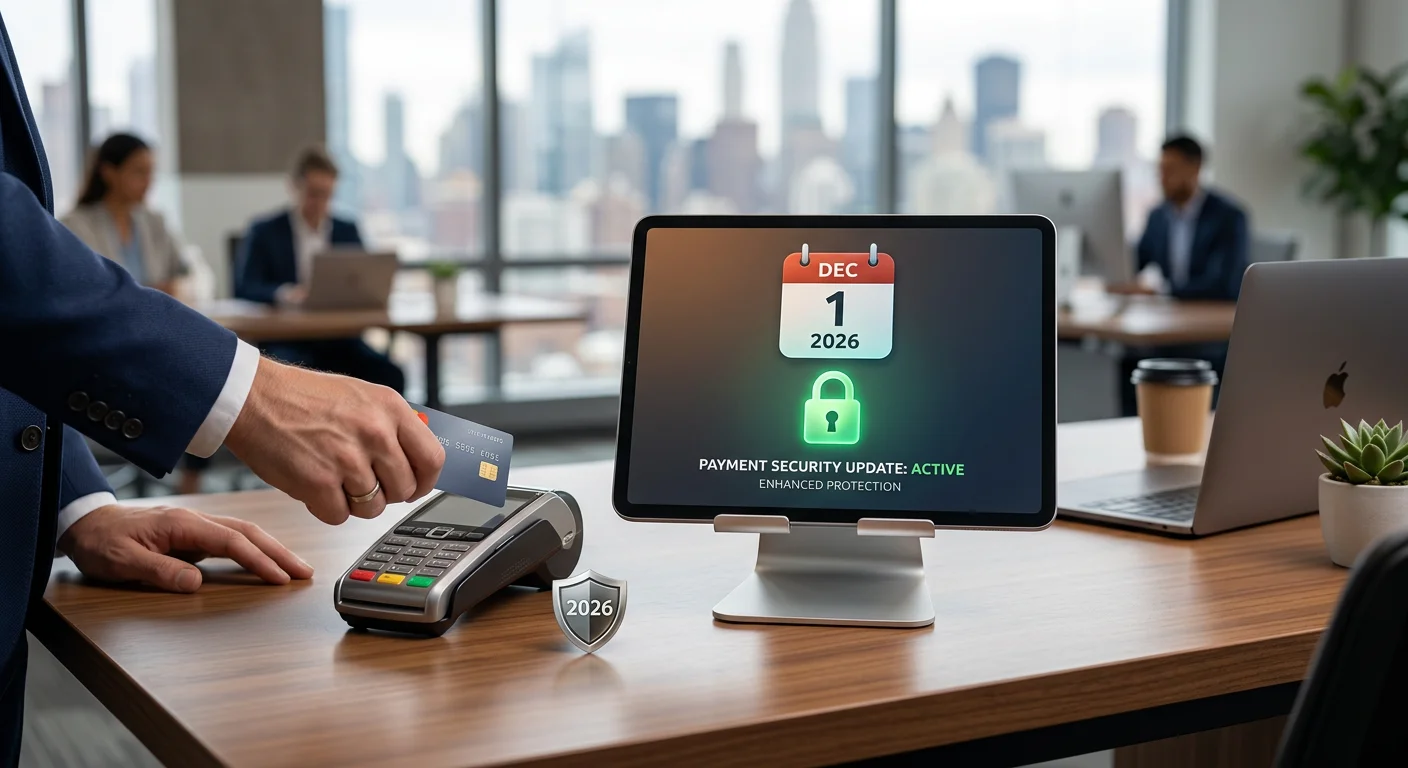
Payment security continues to evolve as businesses face rising fraud, more sophisticated cyberattacks, and tighter compliance expectations. The December 1, 2026 payment security update for businesses is a reminder that payment environments must be actively managed, not treated as a one-time setup. Whether your company processes card payments online, in person, or through subscription billing, this update is an opportunity to strengthen controls and reduce exposure.
For business owners, finance teams, and operations leaders, the most important question is not simply what changed, but how to prepare. Payment security updates often affect systems, vendors, employee workflows, and customer trust. Companies that act early are better positioned to avoid disruptions, prevent fraud losses, and remain compliant with evolving standards.

Why the December 1, 2026 update matters
Payment security updates are rarely isolated technical changes. They typically reflect broader industry responses to increasing fraud attempts, higher transaction volumes, and more complex digital payment ecosystems. The December 1, 2026 update may influence how businesses authenticate transactions, store sensitive information, manage payment gateways, and monitor suspicious activity.
Even if the update does not require dramatic changes to every organization, it can still affect daily operations. Small businesses, large enterprises, and e-commerce brands may all need to review their current payment systems to confirm that they align with the latest security expectations. In many cases, the cost of not preparing is far greater than the cost of implementing preventive controls.
Common areas affected by payment security changes
Although specific requirements vary by industry and provider, payment security updates often focus on these areas:
- Cardholder data protection
- Fraud detection and transaction monitoring
- Multi-factor authentication for administrators and employees
- Encryption standards for stored and transmitted data
- Vendor and third-party processor oversight
- Chargeback prevention and dispute management
What businesses should review before the deadline
Preparing for the December 1, 2026 payment security update starts with a practical review of your current payment environment. Businesses should not assume that a processor, gateway, or point-of-sale provider is handling everything automatically. Internal oversight remains essential.
1. Payment processing infrastructure
Examine every touchpoint where customer payment data enters, moves through, or is stored in your systems. This includes checkout pages, mobile payment apps, recurring billing tools, point-of-sale terminals, and internal admin dashboards. Identify outdated software, unsupported plugins, and any integration that has not been reviewed in the last 12 months.
2. Data storage practices
One of the most effective ways to reduce risk is to store less sensitive payment data. Businesses should confirm whether they are retaining cardholder information unnecessarily. If storage is required, ensure that encryption, tokenization, access controls, and retention policies are all current and documented.
3. User access and permissions
Access controls are a major part of payment security. Every employee who can view, process, or change payment records should have the minimum level of access necessary to perform their role. Review permissions for current staff, terminated employees, contractors, and third-party service providers.
4. Security policies and incident response plans
Your payment security strategy should include a clear incident response plan. If fraudulent activity, unauthorized access, or a system breach occurs, your team should know exactly who to contact, how to contain the issue, and how to communicate with affected customers and providers.
How businesses can prepare effectively
Preparation should begin well before the December 1, 2026 date. A structured approach helps businesses stay organized and reduces the chance of last-minute compliance issues. The following steps can help create a more secure payment environment.
Conduct a full payment security audit
Start with an internal audit of your payment workflows. Map where payment data is collected, processed, transmitted, and stored. Include all software tools, external vendors, and staff roles involved in the process. This audit can reveal hidden vulnerabilities that are often missed during routine operations.
Update authentication and access controls
Implement strong authentication methods, especially for administrative accounts and remote access. Multi-factor authentication should be standard for payment-related systems. Regularly review password policies, session timeouts, and account recovery processes to make sure they match current best practices.
Train employees on security awareness
Human error remains one of the leading causes of payment security incidents. Employee training should cover phishing prevention, secure handling of payment information, fraud red flags, and escalation procedures. Training must be repeated regularly so that staff remain alert as threats change.
Practical training topics for teams
- Recognizing suspicious payment requests
- Verifying customer identity during high-risk transactions
- Handling refund and chargeback requests securely
- Reporting unusual system behavior immediately
Work closely with payment vendors
Many businesses rely on outside providers for gateways, processors, subscription billing, or fraud screening. Ask vendors how they are preparing for the December 1, 2026 payment security update, and request documentation where needed. Confirm their security certifications, breach notification processes, and service-level expectations.
Risks of waiting until the last minute
Delaying preparation can create avoidable problems. Businesses that wait too long may face technical incompatibilities, failed transactions, compliance gaps, or customer trust issues. If updates require software patches, hardware replacements, or policy revisions, implementation may take longer than expected.
Late preparation also increases the chance of rushed decisions. In payment security, rushed decisions often lead to incomplete testing, configuration errors, and overlooked vulnerabilities. A phased approach gives teams time to test changes, resolve issues, and communicate clearly with stakeholders.
Looking for a reliable real estate platform to sell your property quickly and transparently?
EmlakPlatform is not just an option, it is the smart solution for you. We combine advanced technology, full transparency, and professional support

Benefits of improving payment security now
Although the December 1, 2026 update may be the trigger, the benefits of preparation extend far beyond compliance. Strong payment security can improve fraud detection, reduce chargebacks, support customer confidence, and protect brand reputation. It can also make audits easier and reduce the burden on internal teams when security questions arise.
Businesses that invest in secure payment practices often gain operational advantages as well. Clearer workflows, better vendor oversight, and more disciplined data handling can improve efficiency while lowering risk. In competitive markets, trust is a business asset, and secure payment experiences help reinforce that trust.
Final thoughts
The December 1, 2026 payment security update for businesses should be treated as a strategic priority, not just a compliance deadline. Organizations that review their systems early, strengthen access controls, train employees, and coordinate with vendors will be better prepared for the change.
In a payment environment where threats continue to evolve, proactive security is one of the smartest business investments you can make. By taking action now, your company can reduce risk, maintain continuity, and deliver a safer payment experience for every customer.