Northern Cyprus Real Estate & Investment Deals | Emlak Platform
Cities

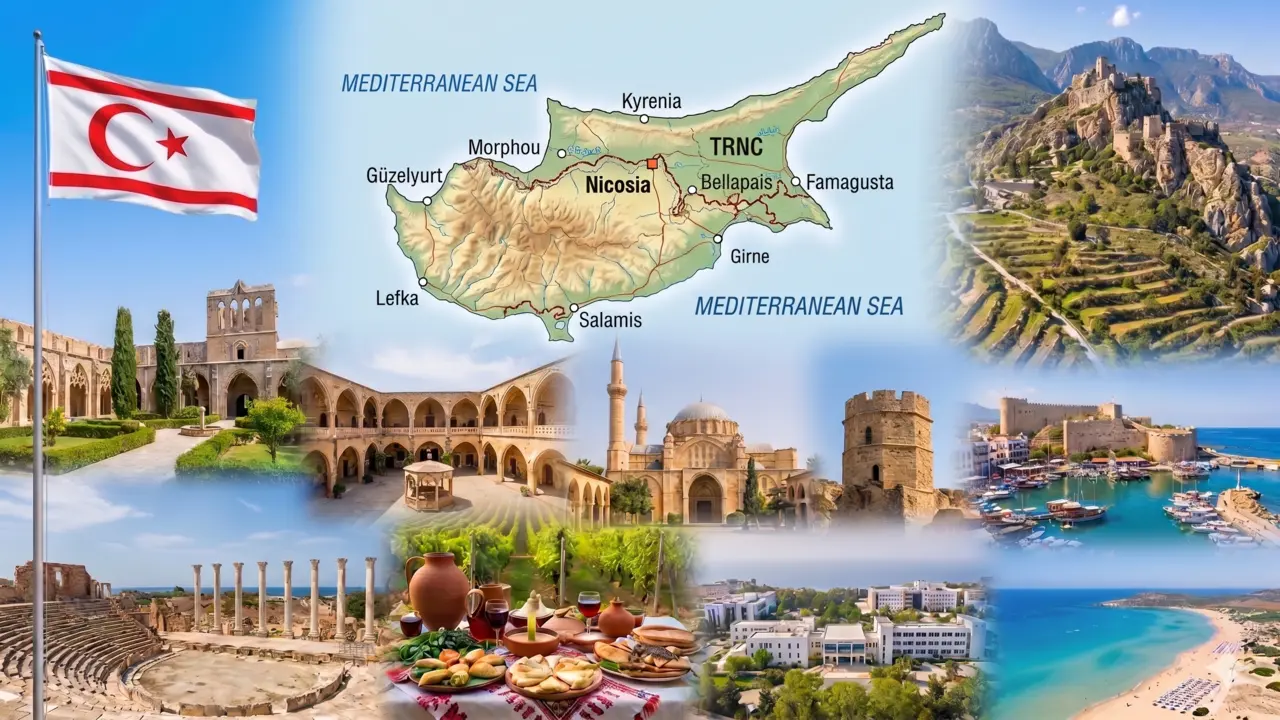
Kyrenia is a city located in northern Cyprus, also known as Turkish Cyprus. It is considered a resort city with a popula...

İskele (Trikomo in Greek), is the administrative center of the İskele District in the Turkish Republic of Northern Cypru...

Famagusta (from the Latin name of the city: Famagusta) is a Cypriot city, belonging to the northern part of the island o...
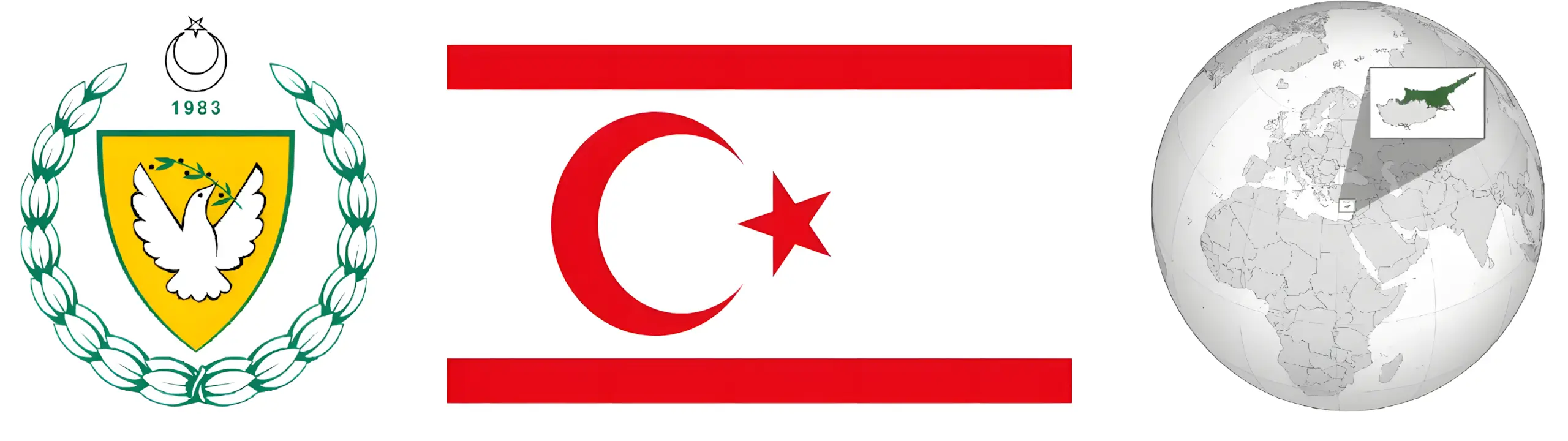
Northern Cyprus, officially known as the Turkish Republic of Northern Cyprus (TRNC), is a state located in the northern part of the island of Cyprus, the third-largest island in the Mediterranean Sea. It covers an area of approximately 3,355 square kilometers and boasts captivating scenery that combines towering mountains and turquoise beaches. Despite its limited international recognition, it enjoys a unique level of security and economic stability.
Historical Narrative and Political Roots
Ancient and Medieval History
Northern Cyprus has been influenced by numerous civilizations that have left an indelible mark:
- Byzantine and Frankish Eras: The island was an important commercial and military center.
- Ottoman Rule (1571): The island came under Ottoman rule, and Turkish Cypriots began to settle there, remaining under Ottoman rule for more than three centuries.
British Colonialism and Independence
In 1878, Cyprus came under British administration and was formally annexed by Britain in 1914. In 1960, the island gained independence as a republic shared between Greek and Turkish Cypriots.
Events of 1974 and Declaration of the Republic
Following a coup attempt backed by Greece to annex the island (Enosis), Turkey launched a military operation to protect Turkish Cypriots. This led to the division of the island into two parts. In 1983, the Turkish Republic of Northern Cyprus was declared.
Geography, Climate, and Environmental Diversity
Topography
- Kyrenia Mountain Range (Beşparmak): Extends along the northern coast and offers breathtaking natural views.
- Mesaoria Plain: The breadbasket and main agricultural area in the center.
- Karpaz Peninsula: A pristine area known for its wild donkeys and secluded golden beaches.
Climate
It enjoys a typical Mediterranean climate; hot and dry summers, and mild and rainy winters, making it an ideal destination for tourism year-round.
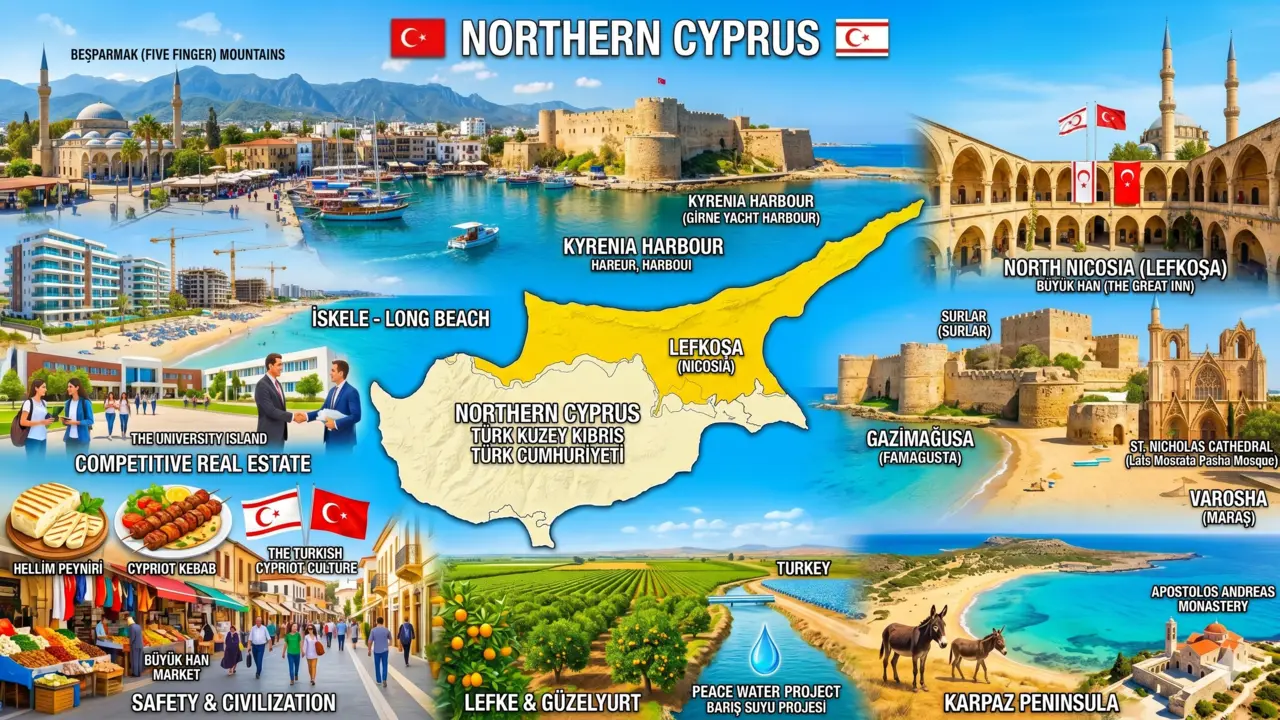
Administrative Divisions of Northern Cyprus
The Turkish Republic of Northern Cyprus is administratively divided into 6 districts (historically referred to as "Kaza"), each comprising major cities and affiliated villages. Here is a detailed list of the districts and their main cities:
Lefkoşa District (Nicosia District)
- Main City: North Nicosia (Lefkoşa); the capital and largest city in the country, and considered the main administrative and economic center.
- Importance: Houses government buildings, major universities, and historical markets.
Girne District (Kyrenia District)
- Main City: Kyrenia (Girne); the pearl of the northern coast and the tourism capital of the country.
- Importance: Known for its historical harbor, ancient castles, and luxury resorts, it is the primary destination for tourists and real estate investors.
Gazimağusa District (Famagusta District)
- Main City: Famagusta (Gazimağusa); a historic city whose port is the most important in the north.
- Importance: Home to Eastern Mediterranean University, and famous for its historical walls and the "Maraş" (Varosha) area.
İskele District (Trikomo District)
- Main City: İskele (Trikomo); located at the beginning of the Karpaz Peninsula.
- Importance: Has witnessed tremendous urban development recently, and has become an attractive center for real estate investment thanks to its long beaches like "Long Beach."
Güzelyurt District (Morphou District)
- Main City: Güzelyurt (Morphou); located in the west and known as the "Beautiful Garden."
- Importance: It is the main agricultural center in the country, famous for growing citrus fruits and fruits.
Lefke District (Lefka District)
- Main City: Lefke; formerly affiliated with Güzelyurt and became an independent district in 2016.
- Importance: A beautiful mountainous area overlooking the sea, home to the European University of Lefke, and known for its copper mining history and ruins.
Summary of Administrative Distribution:
- Major Cities: North Nicosia, Kyrenia, and Famagusta.
- Emerging Investment Areas: İskele (Long Beach).
- Natural and Pristine Areas: Karpaz Peninsula (administratively part of İskele District).
Main Cities and Tourist Attractions
North Nicosia (Lefkoşa)
It is the only divided capital in the world. It includes historical landmarks such as "Büyük Han" (the Great Inn) and the Selimiye Mosque (formerly St. Sophia Cathedral).
Kyrenia (Girne)
Considered the tourism capital. Its old harbor and historical castle attract thousands of tourists, in addition to luxury resorts and international hotels.
Famagusta (Gazimağusa)
A city of castles and historical walls, and includes the "Maraş" (Varosha) area, which the government has recently begun to reopen parts of to the public.
Economy and Vital Sectors
Higher Education Sector
Northern Cyprus is considered an "island of universities." It includes more than 20 international universities attended by students from more than 100 countries, making the education sector a key driver of the economy and a constant demand for student housing.
Tourism and Casinos
The tourism sector, especially casino and beach resort tourism, is one of the largest sources of national income, with the state providing significant facilities for this sector.
Agriculture and Water
The "Peace Water Pipeline" project, which transfers water from Turkey to Northern Cyprus across the sea, has revolutionized the agricultural sector, enabling the country to grow citrus fruits and vegetables with high efficiency.
Real Estate Investment (Investor's Guide)
Based on your interest in real estate, here are reasons why investors are turning to Northern Cyprus:
- Competitive Prices: Real estate prices in Northern Cyprus are still low compared to Southern Cyprus or European countries overlooking the Mediterranean.
- Rental Yield: Thanks to students and tourists, the annual rental yield reaches 8-12%.
- Foreign Ownership: The state allows foreigners to own real estate with registered contracts that guarantee their rights in full.
- Value Growth: Real estate experiences an annual increase in its market value by percentages ranging between 10-15%.
Society, Culture, and Daily Life
- Language: Turkish is the official language, with a very wide spread of English.
- Safety: Northern Cyprus is ranked as one of the safest countries in the world, with crime rates at their lowest levels.
- Cuisine: A wonderful blend of Turkish and Mediterranean cuisine, famous for "Halloumi" cheese and Cypriot kebab.
Comprehensive Guide to the Turkish Republic of Northern Cyprus
| Aspect | Key Details and Information |
| Location & Area | Located in the northern part of Cyprus (the third-largest island in the Mediterranean), covering approximately 3,355 square kilometers. |
| Geography & Topography | Features the Kyrenia Mountain Range (Beşparmak), the Mesaoria agricultural plain, and the pristine Karpaz Peninsula. |
| Climate | Typical Mediterranean climate; hot, dry summers and mild, rainy winters. |
| Political Roots | Influenced by Ottoman rule (1571) and British administration (1878); the TRNC was declared in 1983. |
| Administrative Divisions | Divided into 6 districts: Lefkoşa, Girne, Gazimağusa, İskele, Güzelyurt, and Lefke. |
| Major Cities | North Nicosia: The administrative capital; Kyrenia: The tourism capital; Famagusta: Historic port and city of castles. |
| Education Sector | Known as the "Island of Universities"; home to over 20 international universities with students from 100+ countries. |
| Economy | Driven by higher education, tourism and casinos, and agriculture supported by the "Peace Water Pipeline" from Turkey. |
| Real Estate Investment | Offers competitive prices, high rental yields (8-12%), and annual market value growth of 10-15%. |
| Society & Culture | Turkish is the official language with English widely spoken; famous for Halloumi cheese and Cypriot kebab. |
| Safety | Ranked as one of the safest countries in the world with very low crime rates. |
Conclusion
Northern Cyprus represents a rapidly emerging destination, whether for those seeking a high quality of life and reasonable living costs, or for investors looking for pristine markets with rapid growth. It is a country that combines the charm of Latin and Ottoman history with modern economic opportunities.