UAE Properties for Sale in Dubai & Prime Locations | Emlak Platform
Cities
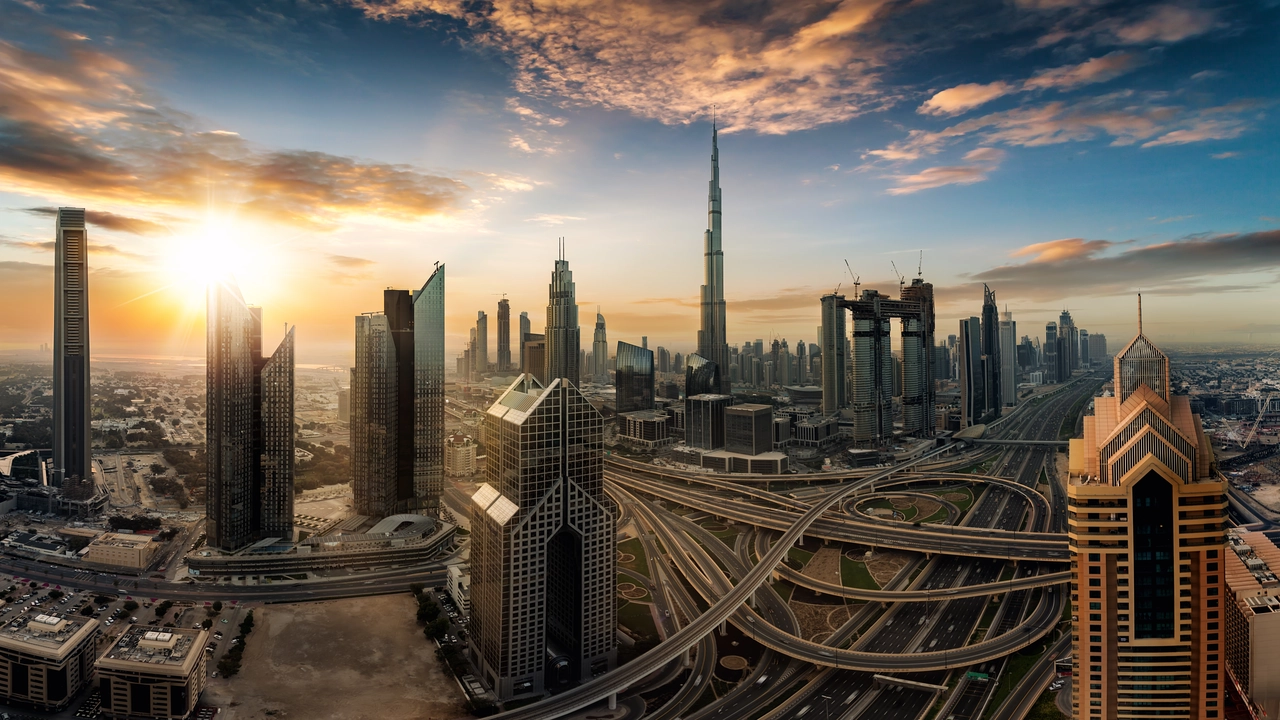
Dubai holds a prominent position as the economic capital of the United Arab Emirates, and it has witnessed radical trans...
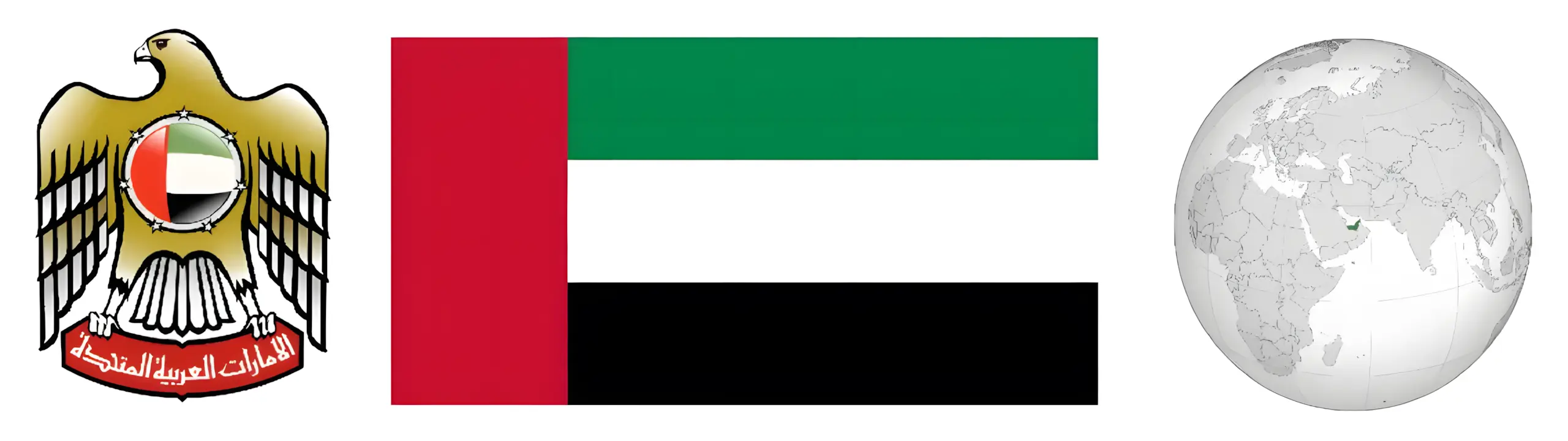
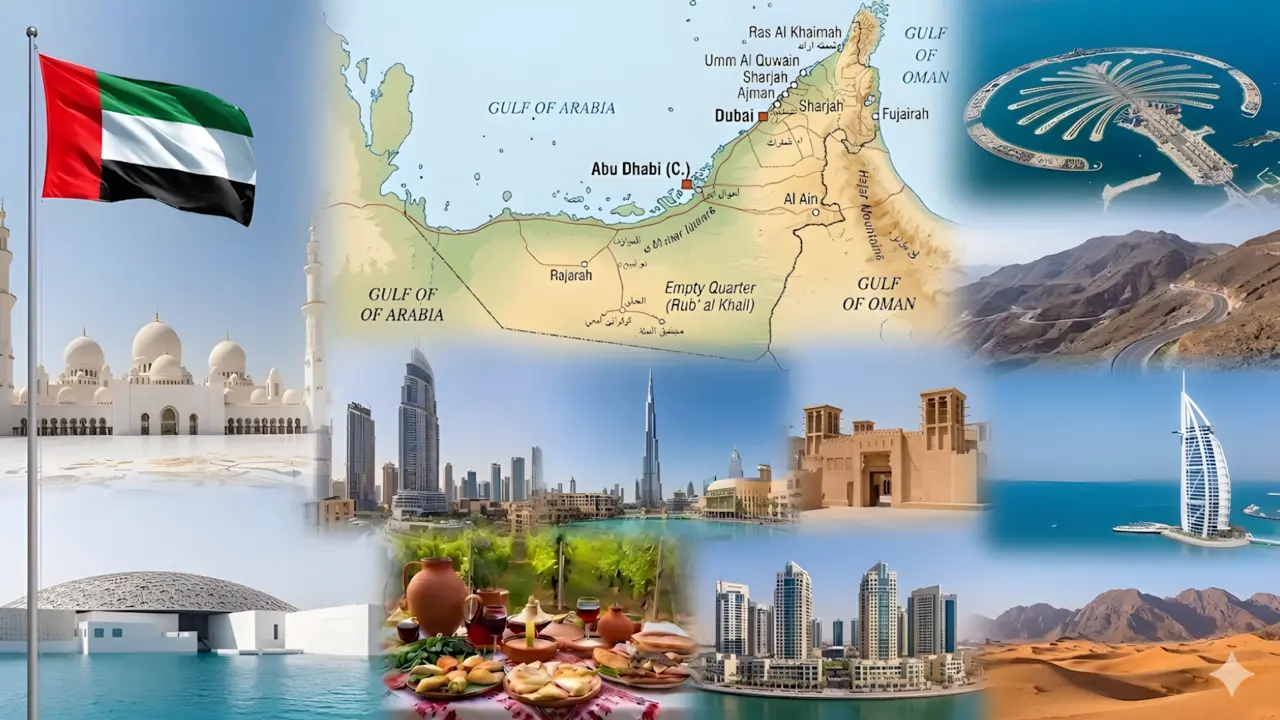
The United Arab Emirates is a federal state located in the eastern Arabian Peninsula, overlooking the Arabian Gulf and the Gulf of Oman. Founded on December 2, 1971, it is considered today one of the most stable and prosperous countries in the world, thanks to the vision of its wise leadership and the employment of its natural resources to build a sustainable knowledge-based economy.
Historical Narrative and Ancient Roots
Pre-Union History
Humans have inhabited the area of the Emirates for thousands of years, as archaeological discoveries have proven the existence of ancient civilizations such as the Umm an-Nar and Hafit cultures. The region was a vital commercial center linking the civilizations of Mesopotamia and the Indus Valley.
The Colonial Era and Treaties
In the 19th century, the Arab tribes in the region signed protection treaties with Britain to secure maritime trade routes, and the region was then known as the "Trucial States."
The Dawn of the Union (1971)
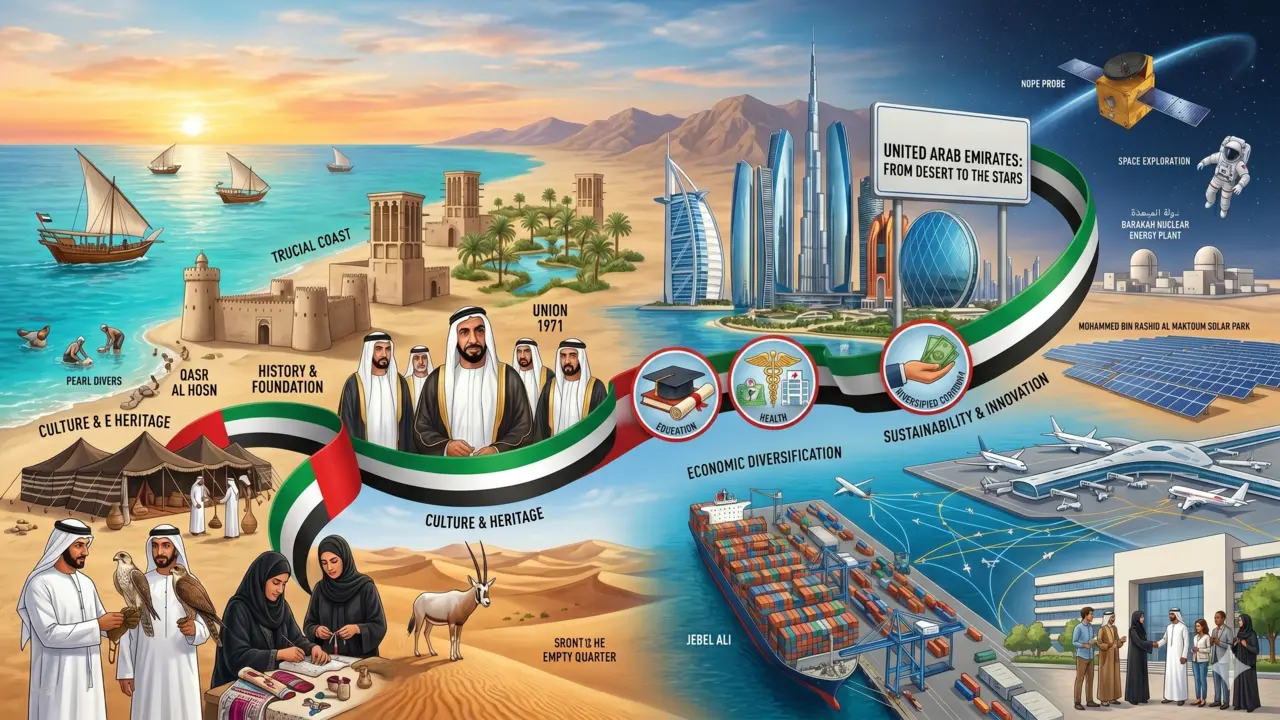
Through the diligent efforts of the late Sheikh Zayed bin Sultan Al Nahyan and Sheikh Rashid bin Saeed Al Maktoum, six emirates united on December 2, 1971 (Abu Dhabi, Dubai, Sharjah, Ajman, Umm Al Quwain, and Fujairah), and then Ras Al Khaimah joined in 1972 to complete the union of the seven emirates.
Political and Constitutional System
The Supreme Council of the Union
It is the highest authority in the country, consisting of the rulers of the seven emirates. It is responsible for setting general policies and ratifying federal laws.
The Federal Government and the Federal National Council
- President of the State: He is the Supreme Commander of the Armed Forces and the Chairman of the Supreme Council.
- Council of Ministers (Cabinet): The executive authority that manages the internal and external affairs of the state.
- Federal National Council (FNC): Represents the legislative and oversight authority, and citizens participate in the selection of half of its members through elections.
Geography, Climate, and Environmental Diversity
Terrain
The terrain of the Emirates varies between vast sand dunes (the Empty Quarter desert), towering mountains (the Hajar Mountains in the east of the country), and coastal plains rich in wetlands.
Climate
The country is characterized by a tropical desert climate, very hot in the summer and mild and beautiful in the winter, making it a global winter tourist destination.
Sustainability and Environmental Protection
The UAE is making tremendous efforts to protect endangered species such as the Arabian Oryx and falcons, and is investing heavily in renewable energy projects (such as the Mohammed bin Rashid Al Maktoum Solar Park and the Barakah Peaceful Nuclear Energy Plant).
Economic and Financial Renaissance
From Oil to a Knowledge Economy
Despite possessing the sixth-largest oil reserves in the world, the UAE has succeeded in diversifying its sources of income remarkably, with non-oil sectors (trade, tourism, real estate, and financial services) contributing more than 70% of the gross domestic product (GDP).
Global Logistics Centers
- Jebel Ali Port: The largest man-made port in the world.
- Dubai and Abu Dhabi Airports: Global hubs connecting East and West.
Space Sector and Innovation
The UAE entered history through the "Hope Probe" to explore Mars and the Emirati astronaut program, confirming the country's ambition to lead advanced technology sectors.
The Seven Emirates (Overview of Each Emirate)
| Emirate | Key Feature |
| Abu Dhabi | The capital, center for culture, energy, and the largest sovereign wealth fund. |
| Dubai | Global commercial capital, an icon of modern architecture and tourism. |
| Sharjah | Cultural capital, and a beacon of science, literature, and arts. |
| Ajman | An emerging industrial and commercial center characterized by rapid urban growth. |
| Ras Al Khaimah | Stunning mountainous nature and an industrial renaissance in the ceramics and pharmaceutical sectors. |
| Fujairah | The UAE's gateway to the Indian Ocean and a global center for ship bunkering. |
| Umm Al Quwain | Known for tranquility, natural areas, and the preservation of maritime heritage. |
Society, Culture, and Coexistence
A Model of Tolerance and Coexistence
The UAE is considered a unique model, where more than 200 nationalities live in complete harmony on its land. The state has even dedicated a "Ministry of Tolerance" to solidify these values.
Education and Health
The state invests the largest portion of its budget in building the minds of its children through the most prestigious international universities, and providing a world-class healthcare system that rivals the best developed countries.
Heritage and Traditions
Despite its modernity, Emirati society maintains its authentic Arab customs, from generous hospitality (Arabic coffee), traditional sports (camel racing, falconry), and distinctive national dress.
The UAE and International Issues
The UAE plays a pivotal role in global humanitarian work, consistently ranking for many years as one of the largest donors of development aid relative to its gross national income. It also adopts a balanced foreign policy aimed at spreading peace and stability in the region and the world.
Comprehensive Guide to the United Arab Emirates
| Aspect | Key Information and Details |
| Foundation & Union | Founded on December 2, 1971, through the efforts of Sheikh Zayed bin Sultan and Sheikh Rashid bin Saeed. It began with 6 emirates, then was completed with 7 in 1972. |
| Political System | The Supreme Council of the Union is the highest authority, followed by the Council of Ministers (Executive Authority), and the Federal National Council (Legislative and Oversight Authority). |
| Geography & Climate | Varies between the Empty Quarter desert, Hajar Mountains, and coastal plains. The climate is tropical desert (hot in summer and mild in winter). |
| Economic Transformation | Succeeded in diversifying income; non-oil sectors contribute more than 70% of the Gross Domestic Product (GDP). |
| Innovation & Space | Entered the space sector via the "Hope Probe" to explore Mars and the Emirati astronaut program. |
| Sustainability & Energy | Massive investments in renewable energy (Mohammed bin Rashid Solar Park) and peaceful nuclear energy (Barakah Plant). |
| Society & Values | A global model for tolerance hosting over 200 nationalities, while maintaining national identity and heritage sports like falconry and camel racing. |
| Logistics Hubs | Includes the largest man-made port (Jebel Ali) and international airports connecting the East and West. |
Conclusion
The story of the UAE is a story of a will that knows no impossible. From tents in the desert to skyscrapers that kiss the clouds, and from diving trips in search of pearls to space voyages; the UAE remains a beacon of hope and a center for shaping the future.