Turkey Real Estate Listings & Investment Opportunities | Emlak Platform
Cities

The European side of Istanbul is a prime location for modern living and real estate investment, offering advanced infras...

Istanbul Province is one of the provinces of Turkey. It is located in northwestern Turkey, covers an area of 5,196 squar...

Sakarya Province (Turkish: Sakarya ili) is a province of Turkey, with an area of 4,878 km2. Its capital is the city of A...

Kocaeli Province is one of the provinces of Turkey and its capital is İzmit. It has an area of 3,635 km² and a populatio...

Tekirdağ Province (Turkish: Tekirdağ ili) is one of the four Turkish provinces located in Europe, and its capital is the...

Muğla Province (Turkish: Muğla ili) is a Turkish province located in the Aegean region of southwestern Turkey. Its capit...

Antalya Province (Turkish: Antalya Vilayet) is one of the provinces of Turkey. Its capital is the city of Antalya, and i...

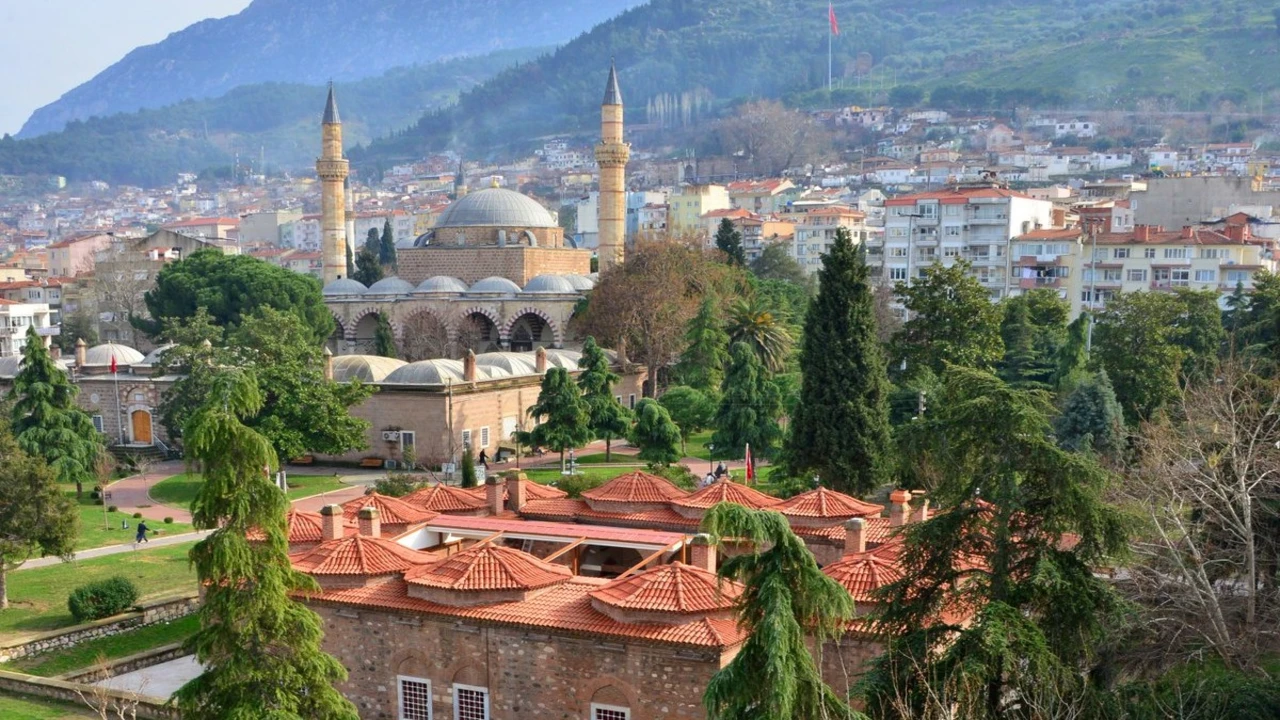
Bursa Province (Turkish: Bursa ili) is a province of Turkey located in the northwest of Anatolia, along the coast of the...

Yalova Province (Turkish: Yalova ili) is one of the provinces of Turkey. Its capital is the city of Yalova. It covers an...

Düzce Province (Turkish: Düzce ili) is a province of Turkey. Its capital is the city of Düzce, and it covers an area of...

Kırklareli Province (Turkish: Kırklareli ili) is a Turkish province. Its capital is the city of Kırklareli. It has an ar...

Ankara Province is one of the provinces of Turkey. Its capital is the city of Ankara. It has an area of 25,615 km² and a...
.webp "İzmir")
İzmir Province (Turkish: İzmir ili) is a Turkish province in western Anatolia, located on the Aegean Sea coast. Its capi...

Trabzon Province (Turkish: Trabzon ili) is one of the provinces of Turkey, with its capital city being Trabzon. It has a...

Balıkesir Province (Turkish: Balıkesir Vilayeti) is a province of Turkey. Its capital is the city of Balıkesir. It cover...

Edirne Province (Turkish: Edirne ili) is one of the provinces of Turkey. Its capital is the city of Edirne. It has an ar...
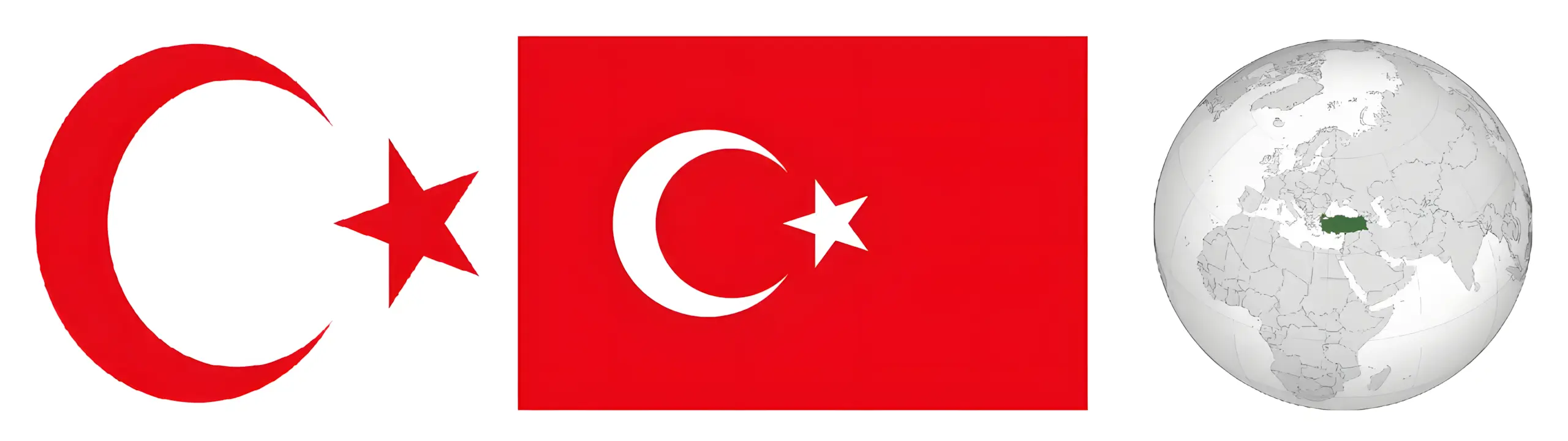
Turkey (Türkiye), officially the Republic of Türkiye, is one of the world's most distinctive countries from a geopolitical and historical perspective. It is a transcontinental nation that connects the vibrant heart of Asia with the ancient edges of Europe, making it a melting pot where civilizations of nations have converged throughout the ages.
Geographical Location and Natural Boundaries
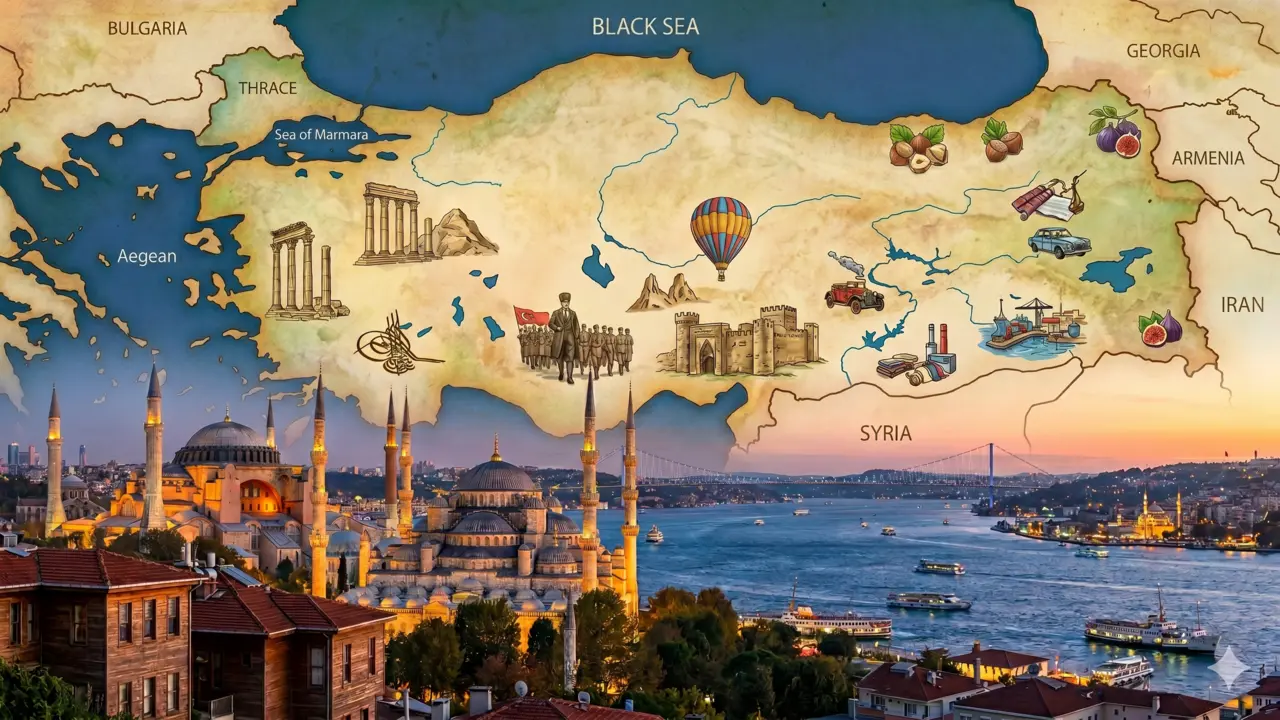
Türkiye is situated in a unique strategic location; 97% of its area lies in Asia (the Anatolian Peninsula) and 3% in Europe (Eastern Thrace). The Asian and European parts are separated by important international waterways: the Bosphorus Strait, the Dardanelles Strait, and the Sea of Marmara.
Land and Sea Borders:
- North: Black Sea and the country of Georgia.
- East: Armenia, Iran, and Azerbaijan (Nakhchivan).
- South: Syria, Iraq, and the Mediterranean Sea.
- West: Greece, Bulgaria, and the Aegean Sea.
Türkiye's total area is approximately 783,562 km², making it the 37th largest country in the world by area.
Major Historical Milestones
Türkiye's history is not just the history of a country, but a record of human civilizations.
Ancient and Medieval Eras
Anatolia was home to the Hittite, Assyrian, and Greek civilizations. The region witnessed the battles of Alexander the Great, and later became the center of the Byzantine Empire and its capital, Constantinople (present-day Istanbul).
The Seljuk Era and the Beginning of Turkification
In 1071 AD, the Seljuk Turks achieved a decisive victory at the Battle of Manzikert against the Byzantines. This moment is considered the actual beginning of the Turks' entry into Anatolia and the establishment of the "Sultanate of Rum."
The Ottoman Empire (1299 - 1922)
Founded by Osman I, it transformed into a global power after the conquest of Constantinople in 1453 by Sultan Mehmed the Conqueror. It reached its peak during the reign of Suleiman the Magnificent, with its territories extending to vast parts of Africa, Asia, and Europe.
Establishment of the Republic (1923)
After World War I and the War of Independence, Mustafa Kemal Atatürk declared the establishment of the modern Republic of Türkiye on October 29, 1923, adopting a comprehensive secular and modernizing approach to the system of government, laws, and language.
Population and Demographics
Türkiye's population in 2025 is estimated to be around 86.4 million.
- Ethnic Groups: Turks constitute about 70-75% of the population, while Kurds represent the largest ethnic minority at 15-20%, in addition to other minorities such as Arabs, Armenians, and Greeks.
- Religion: Islam is the dominant religion for the majority of the population, with Christian and Jewish minorities. The state adheres to religious neutrality according to the constitution (secularism).
- Language: Turkish is the sole official language and has been written in the Latin alphabet since the reforms of 1928.
Politics and Government System
Türkiye transitioned from a parliamentary system to a presidential system after a referendum in 2017.
- President of the Republic: He is the head of state and head of government (currently Recep Tayyip Erdoğan).
- Parliament: Consists of a single chamber called the "Grand National Assembly," with 600 members.
- International Relations: Türkiye is a member of the North Atlantic Treaty Organization (NATO), the Group of Twenty (G20), and aspires to join the European Union.
The Turkish Economy: The Rise of an Emerging Power
The Turkish economy is classified as one of the major emerging economies in the world.
- Gross Domestic Product: Exceeds one trillion dollars (nominal), and ranks high globally in terms of purchasing power parity.
- Strong Sectors:
- Industry: Especially the automotive, textile, and machinery industries.
- Agriculture: Türkiye is one of the largest exporters of hazelnuts, figs, and apricots in the world.
- Tourism: It is one of the most important sources of foreign currency, attracting millions of tourists annually.
Geography and Climate
Due to its diverse terrain, the climate in Türkiye varies drastically:
- Mediterranean and Aegean Coast: Temperate climate (hot and dry summers, warm and rainy winters).
- Black Sea Coast: Oceanic climate (rainy throughout the year).
- Interior Plateau (Anatolia): Continental climate (hot summers and very cold winters with snowfall).
- Highest Peak: Mount Ararat (5,137 meters).
Tourism in Türkiye: The Most Prominent Destinations
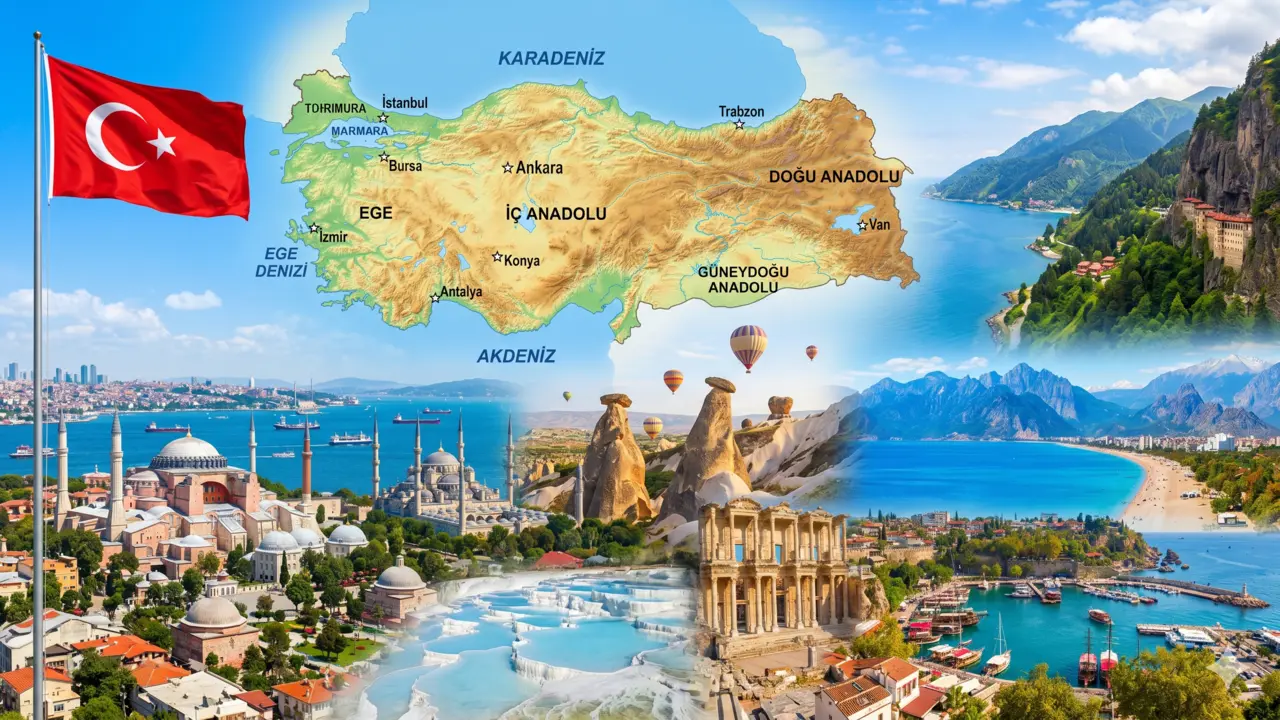
Türkiye is a global tourist destination par excellence, and some of its most important cities include:
- Istanbul: The city that never sleeps, home to Hagia Sophia, the Blue Mosque, and Topkapi Palace.
- Antalya: The capital of coastal tourism and Mediterranean resorts.
- Cappadocia: Famous for its fairy chimneys and hot air balloon rides.
- Bursa: The first Ottoman capital and the ideal destination for skiing on Mount Uludağ.
Turkish Culture and Cuisine
Turkish cuisine is characterized as a blend of Arabic, Persian, and Balkan cuisines. Kebab, baklava, and Turkish coffee are cultural symbols that have conquered the world. In art, Turkish drama (TV series) is experiencing tremendous popularity in more than 150 countries.
Turkish Provinces
The Republic of Türkiye consists of 81 provinces, distributed across seven geographical regions. Here is a comprehensive list of Turkish provinces with a simplified description of each, organized by region for easy navigation:
1. Marmara Region (Heart of Trade and Industry)
- Istanbul: The economic and tourist capital, and the only city in the world located on two continents.
- Bursa: The first Ottoman capital, famous for silk production, Mount Uludağ, and automobile factories.
- Kocaeli: A massive industrial center near Istanbul, home to the city of İzmit.
- Sakarya: Known for its natural beauty (Lake Sapanca) and agricultural and industrial activity.
- Tekirdağ: Located on the European side, famous for sunflower oil production and its view of the Sea of Marmara.
- Edirne: Located on the borders with Greece and Bulgaria, famous for the historical Selimiye Mosque.
- Çanakkale: Includes the Dardanelles Strait and the site of the legendary city of Troy.
- Yalova: A quiet city famous for its sulfurous hot springs and therapeutic resorts.
- Balıkesir: Has coastlines on both the Marmara and Aegean Seas, and is famous for olive production.
- Bilecik: The birthplace of the Ottoman Empire, home to the tomb of Ertuğrul Gazi.
- Kırklareli: Located in the far northwest of Türkiye, characterized by dense forests.
2. Central Anatolia Region (Political and Historical Heart)
- Ankara: The political capital and seat of government and parliament, and a major educational center.
- Konya: The city of Jalaluddin Rumi, and considered the "breadbasket of Türkiye" due to its vast agricultural areas.
- Kayseri: An industrial and commercial city, located at the foot of Mount Erciyes and famous for "Pastırma" (cured meat).
- Eskişehir: Nicknamed the "Venice of Türkiye" or the city of students, it is a very modern city.
- Nevşehir: Home to the enchanting "Cappadocia" region, hot air balloons, and underground cities.
- Sivas: A historical city with many important Seljuk monuments.
- Kırşehir: Famous for folk arts and traditional Turkish music.
- Tokat: An ancient city in the history of Anatolia, famous for its fortress and old markets.
- Yozgat: An agricultural and pastoral area in the heart of Anatolia.
- Aksaray: Located on the historical Silk Road and home to the natural Ihlara Valley.
- Kırıkkale: An important center for defense industries and weapons in Türkiye.
- Karaman: A historical city that was the capital of the "Beni Karaman" principality and the source of the Turkish language.
- Çankırı: Famous for its ancient rock salt mines and salt caves.
- Niğde: Located near the Taurus Mountains, it is an important agricultural region.
3. Aegean Region (Charm of Nature and Olives)
- İzmir: The Pearl of the Aegean, the third largest city, and considered a vital commercial and tourist port.
- Aydın: Famous for fig and olive production, and home to the tourist city of "Kuşadası."
- Denizli: Famous for "Pamukkale" (Cotton Castle) and high-quality textiles.
- Muğla: Home to the most famous international tourist resorts such as "Bodrum," "Marmaris," and "Fethiye."
- Manisa: The city of Ottoman princes, famous for grape production and modern industries.
- Afyonkarahisar: Famous for its hot mineral baths and the production of marble and sweets (Turkish Delight).
- Kütahya: The capital of ceramics and pottery in Türkiye.
- Uşak: The first Turkish city to establish a sugar factory, and famous for carpet making.
4. Mediterranean Region (Turkish Riviera)
- Antalya: The tourist capital of Türkiye, famous for its golden beaches and luxury hotels.
- Mersin: A coastal city with one of the largest ports on the Mediterranean Sea.
- Adana: A city of agriculture and industry, famous for "Adana Kebab" and its fertile plains.
- Hatay: A city of cultural and religious diversity, famous for its ancient cuisine (Knafeh).
- Osmaniye: An agricultural city located in the "Çukurova" plains region.
- Kahramanmaraş: Famous for the production of Turkish ice cream (Dondurma) and red pepper.
- Isparta: Nicknamed the "City of Roses," it produces the best rose oil in the world.
- Burdur: Famous for its lakes and Roman archaeological sites.
5. Black Sea Region (Forests, Tea, and Hazelnuts)
- Trabzon: The Bride of the Turkish North, famous for the Sumela Monastery and the beauty of the mountainous nature.
- Rize: The tea capital of Türkiye, characterized by its evergreen mountains.
- Samsun: The largest city in the Black Sea, and from here the Turkish War of Independence began.
- Artvin: Located on the Georgian border, famous for its dense forests and picturesque landscapes.
- Ordu: The hazelnut capital of the world, and characterized by the cable car overlooking the sea.
- Giresun: Famous for growing hazelnuts and cherries, and has a single island in the Black Sea.
- Sinop: The northernmost point in Türkiye, and considered one of the quietest and happiest cities.
- Zonguldak: The capital of coal and mining in Türkiye.
- Bolu: Famous for Lake Abant and its dense forests, and considered a school for Turkish cooks.
- Karabük: Home to the historical city of "Safranbolu," a UNESCO World Heritage Site.
- Kastamonu: A historical city famous for its old wooden architecture and forests.
- Düzce: A green city located between Istanbul and Ankara, famous for its waterfalls.
- Amasya: A historical city located in a narrow valley, famous for its Ottoman houses on the banks of the river.
- Bayburt: A small mountainous province located on the ancient Silk Road.
- Bartın: Famous for its old wooden houses and its historical port "Amasra."
- Gümüşhane: Famous for its ancient silver mines and the archaeological village of "Süleymaniye."
- Çorum: The capital of the Hittite civilization, and famous for the production of "Roasted Chickpeas" (Leblebi).
6. Eastern Anatolia Region (Highlands and Snow)
- Erzurum: A historical mountainous city, famous for the "Palandöken" ski center.
- Van: Located on the banks of the largest lake in Türkiye, and famous for cats with different colored eyes.
- Ağrı: Home to Mount "Ararat," the highest peak in Türkiye.
- Malatya: The apricot capital of the world, exporting huge quantities of it.
- Elazığ: Famous for Lake "Hazar" and historical areas such as "Harput."
- Erzincan: Famous for the production of cheese and decorated copper.
- Kars: A border city influenced by Russian architecture, and famous for the archaeological city of "Ani."
- Bitlis: A historical city famous for its stone houses and the "Ahlat" region.
- Bingöl: A mountainous area famous for its natural pastures and honey.
- Muş: Famous for its vast plains and the cultivation of tobacco and grains.
- Tunceli: Characterized by its stunning wild nature and the "Munzur" River.
- Hakkari: Located in the far southeast, characterized by its towering mountains and rugged terrain.
- Iğdır: The only province that borders three countries (Iran, Azerbaijan, Armenia).
- Ardahan: A very cold province located in the far northeast, famous for cattle breeding.
7. Southeastern Anatolia Region (Scent of Ancient Civilizations)
- Gaziantep: The capital of pistachios and baklava, and a huge industrial center in southern Türkiye.
- Diyarbakır: Famous for its huge historical walls, which are considered the second longest walls in the world.
- Şanlıurfa: The city of prophets, home to the Pool of Abraham and the site of "Göbekli Tepe," the oldest temple in history.
- Mardin: A historical city built of yellow stone, overlooking the plains of Mesopotamia.
- Adıyaman: Home to Mount "Nemrut," famous for its huge, mysterious statues.
- Batman: An important center for oil production in Türkiye.
- Siirt: Famous for the production of handmade blankets, pistachios, and pomegranates.
- Şırnak: Located at the meeting point of the Iraqi and Syrian borders, it is a mountainous region.
- Kilis: A small border province with Syria, famous for the production of olive oil and grapes.
| Comparison Aspect | Details and Information |
| Geographical Location | A transcontinental nation; 97% in Asia (Anatolia) and 3% in Europe (Eastern Thrace). |
| Area and Ranking | Approximately 783,562 km², ranking 37th in the world by area. |
| Maritime Borders | Black Sea (North), Aegean Sea (West), Mediterranean Sea (South). |
| Major Waterways | Bosphorus Strait, Dardanelles Strait, and the Sea of Marmara. |
| Population (2025 Est.) | Approximately 86.4 million people. |
| Language and Religion | Turkish is the official language (Latin alphabet). Islam is the dominant religion, the state is constitutionally secular. |
| Government System | Presidential system (since 2017). Current President is Recep Tayyip Erdoğan. |
| Historical Milestones | Ancient civilizations (Hittites, Greeks), Byzantine era, Seljuks (Manzikert 1071), Ottoman Empire (1299-1922), and Republic foundation (1923). |
| Strongest Economic Sectors | Industry (Automotive, Textiles), Agriculture (Hazelnuts, Figs), and Tourism. |
| Climate | Diverse: Mediterranean (South/West), Oceanic (Black Sea), and Continental (Interior). |
| Prominent Tourist Cities | Istanbul, Antalya, Cappadocia (Hot air balloons), and Bursa. |
| Highest Peak | Mount Ararat (5,137 meters). |
Conclusion
Türkiye remains a unique model of a country that balances the authenticity of history with the ambition of the future. Thanks to its location connecting continents and its growing economic power, it asserts itself as a key player in international politics and a prime destination for travelers and investors alike.