Turkish Economy and Real Estate Markets in Summer 2026
Analytical reading of Turkey's inflation decline and its direct impact on real estate and investment trends in 2026.

During the second half of 2026, the Turkish economy is witnessing a delicate and pivotal phase in which fiscal discipline policies intertwine with continuous living and investment challenges, as the decision-maker and the Central Bank strive to curb inflation and restore stability to local markets, while the real estate sector emerges as a true mirror reflecting the extent of the street's and investors' response to these rapid variables. Official data for this summer have shown positive indicators denoting the beginning of the receding of the violent inflation waves that previously struck the country, recording a noticeable slowdown in the annual rate to reach lower levels compared to past months, which is a direct result of strict monetary tightening policies that included keeping interest rates steady and carefully monitoring imported inflation risks and energy prices. Despite these encouraging indicators on the macroeconomic level, the citizen and resident still suffer under the burden of high living costs, specifically regarding housing prices, rents, and basic commodities in major centers like Istanbul and Ankara, which prompted families to reshape their savings and investment priorities amidst radical shifts in market appetite between gold and real estate assets. In this article, we will review a comprehensive and detailed analytical reading of the most prominent structural shifts in the paths of the Turkish economy and real estate markets during the summer of 2026, detailing sectoral inflation figures, consumer expectations, and the repercussions of monetary policy on the future of real estate financing and local and foreign investment.
Analysis of the Macroeconomic Scene in Turkey (Summer 2026)
The Turkish economy is witnessing a delicate and pivotal phase of structural shifts during the second half of 2026, where fiscal and monetary discipline policies intertwine with ongoing living and investment challenges. At a time when the economic decision-maker and the Central Bank of Turkey seek to curb inflation and restore stability to local markets, the real estate sector and asset markets emerge as a mirror reflecting the extent to which the public and investors respond to these rapid changes.
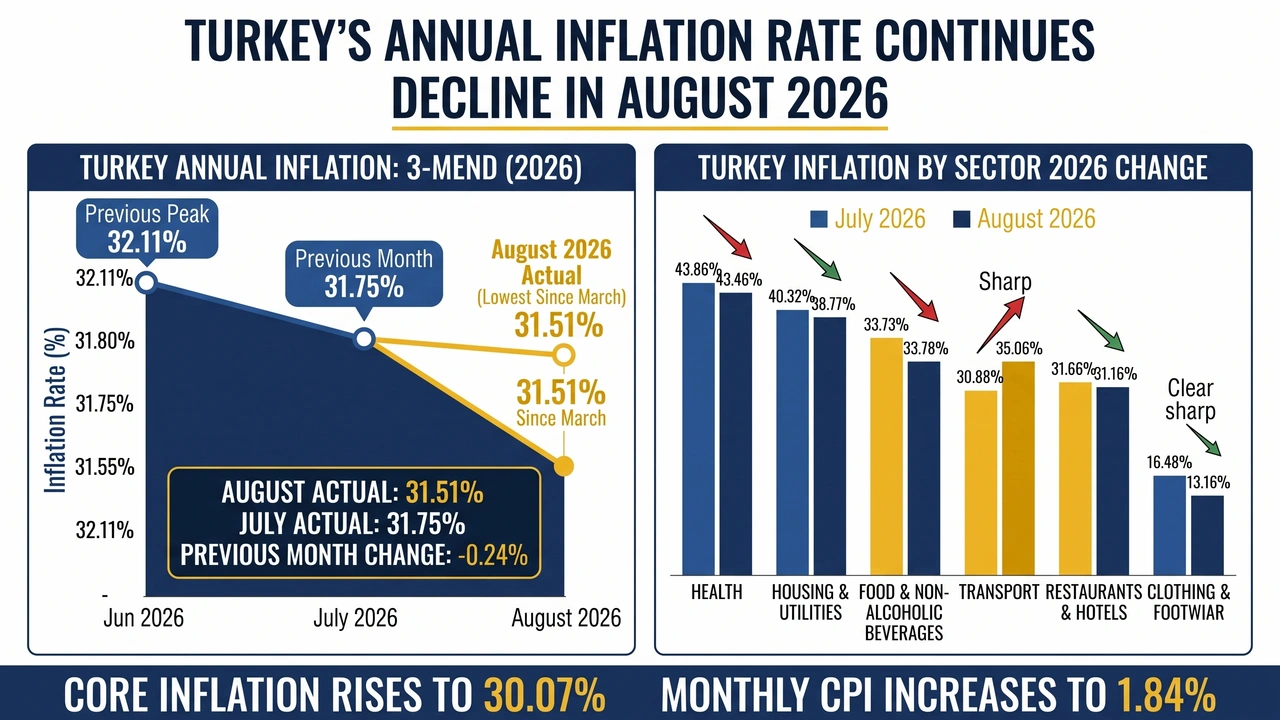
Official data issued by statistical institutions and the Central Bank during July and August 2026 showed positive indicators denoting the beginning of the receding of the violent inflation waves that hit the Turkish economy over the past years. The annual inflation rate recorded a noticeable slowdown for the third consecutive month, reaching 31.51% in August 2026, compared to 31.75% in July, thus exceeding market expectations which favored recording around 31.62%, reaching its lowest reading since last March. This gradual slowdown did not come out of nowhere, but is a direct result of continuous monetary tightening policies that included fixing interest rates at high levels of 37%, with close and continuous monitoring of imported inflation risks and global and local energy prices.
Despite these encouraging indicators in curbing macroeconomic indicators, the real economy suffers from a clear state of disparity; the Turkish citizen and the resident in major cities still labor under the weight of high living costs, specifically regarding housing prices, rents, and basic commodities. Understanding this complex equation requires delving into the details of the performance of various economic sectors, studying the behavior of consumer and saving households, and analyzing the radical changes in investors' appetite towards different assets such as gold and real estate amidst an economic environment whose new features are gradually taking shape.
Rent Fever in Major Cities (Istanbul and Ankara) and Permanent Housing Challenges
The rental crisis, locally and via media termed "rent fever," continues to cast its heavy shadow on the social and economic scene in Turkey, specifically in major urban centers like Istanbul, the capital Ankara, and major tourist cities. Field reports and data issued in August 2026 indicate that the residential real estate market is going through a state of continuous pressure, as citizens and residents face real challenges in securing adequate housing at reasonable prices commensurate with current purchasing power.
Structurally, the persistence of this pressure stems from the intersection of several demographic and economic factors; demand for residential units has not abated, driven by continuous demographic growth, continuous influxes of expatriates, and booming tourism activities. However, this strong demand faces a real crisis in the supply intended for long-term housing. A large part of this supply shortage is due to the tendency of a wide segment of landlords and property owners to prefer the short-term rental model associated with tourist and seasonal activity, given its high financial returns compared to traditional long-term rentals. This trend has led to a reduction in the volume of units available to families and residents, which produced acute tensions in the market and raised the cost of residential stability.
Despite these difficult field pressures, a reading of the data issued by the Central Bank of Turkey indicates the emergence of a glimmer of hope represented by a noticeable slowdown in the pace of rent increases for new homes. The annual inflation rate for newly rented homes recorded 29.21% in June, the lowest level recorded by this indicator in a full 58 months. This percentage, although it seems high in isolation from its context, represents a qualitative shift towards gradual stability after long years of crazy price leaps that exhausted tenants.
More indicative in this context is the performance of rents in real terms; after calculating the effect of general inflation rates, the data showed a decline in real rents by 2.2% compared to the same period last year. This real decline clearly reflects a stage of receding inflationary pressures from the shoulders of tenants, as wage increases and governmental and banking interventions gradually began to bear fruit in narrowing the gap between monthly income and housing costs, despite the continued rise in prices in the nominal (apparent) sense.
Read more about | Turkish Real Estate Market Analysis and Evaluation of Investment Opportunities and Risks
Performance of Main Sectors and Sectoral Inflation Indicators
The general decline in the annual inflation rate to 31.51% in August 2026 was not the result of a random improvement, but came as a outcome of variance in the performance of different economic and service sectors. Several key strategic sectors contributed to pushing the general index towards a slowdown, recording a clear decline in the pace of price growth compared to previous months, while other sectors witnessed counter-pressures that led to a slight acceleration in their prices.
Sectors of Slowdown and Receding Price Pressures
- Food and Non-Alcoholic Beverages Sector : This vital sector is the most impactful on the Turkish household budget, and has witnessed a noticeable decline in the inflation rate to reach 33.79% compared to 37.53% recorded in July. This tangible decrease of more than three percentage points represents a real breather for families, and directly contributes to alleviating the daily living burden.
- Housing and Utilities Sector : Inflation rates within this sector directly related to housing and living dropped to 39.77% compared to 40.32% in the previous month, which is consistent with indicators of slowing rents and increases in residential operating costs.
- Clothing and Footwear Sector : This sector recorded a clear and sharp slowdown at the level of 13.16% compared to 16.48% in July, reflecting the role of seasonal cycles and the decline in non-essential consumer demand.
- Health Sector : The inflation rate in health services and products reached 43.46%, recording a slight decrease from 43.89%, and despite remaining at high levels, its downward trend is a positive indicator.
- Restaurants and Accommodation Services Sector : The inflation rate in it declined to 31.16% compared to 31.65% in July, influenced by the control of tourism and local spending.
Sectors of Acceleration and Ongoing Challenges
In contrast, some sectors contradicted this downward trend and recorded a noticeable acceleration in inflation rates during the same period, most notably:
- Transport Sector : Where the inflation rate jumped to 35.08% compared to 30.83% in July, driven by fluctuations in fuel prices, operating costs, spare parts, and public and private transport services.
- Other Sectors : Slight and varying increases were recorded in the prices of tobacco, entertainment, and culture, reflecting the persistence of some stubborn inflation pockets that pose a challenge to the Central Bank's complete efforts to control the consumer price index.
Monthly Performance and Core Inflation Indicator
On a monthly basis, the consumer price index rose by 1.84% in August, thus achieving its highest monthly increase since May, but this increase remained slightly below market expectations that indicated 1.93% (compared to a monthly increase of 1.78% in July). In the same context, the core inflation index rose to reach its highest level in three months, recording 30.07% compared to 29.91% in the previous month. These econometric models and economic forecasts indicate that inflation may go through some slight monthly fluctuations, but its general path in the medium and long term remains governed by a gradual decline towards the targeted levels.
Looking for a reliable real estate platform to sell your property quickly and transparently?
EmlakPlatform is not just an option, it is the smart solution for you. We combine advanced technology, full transparency, and professional support
Survey of Turkish Household Expectations and Economic Confidence Trends
"Inflation expectations" among the public and households are considered the most important compass guiding consumption, saving, and investment decisions in any modern economy. In this context, the results of the comprehensive household expectations survey conducted by the Central Bank of Turkey, which included a wide sample of 3,251 households, showed highly important psychological and economic shifts reflecting the extent of the Turkish street's awareness of ongoing monetary policies.
The survey results revealed a noticeable decline in inflation expectations during the next 12 months to reach 44.94% in July, recording a decline of 1.19 percentage points compared to the previous month. This decline in future expectations reflects the success of the Central Bank's monetary discourse in consolidating a conviction that structural inflation waves have begun to lose their driving force. Furthermore, households' expectations for the rise in housing and real estate prices over the next year decreased by 1.33 percentage points to settle at 32.49%, which matches the indicators of the actual real estate market slowdown and the receding of the fever of astronomical prices.
In terms of goods and services most worrying to households, the "food" and "fuel and energy" groups topped the list of goods that households believe witnessed the largest price increases over the past year, and are expected to continue recording the highest rates of increase in the coming months, given their direct link to daily living and global and local production and supply costs.
As for the evaluation of the local currency against foreign currencies, the survey showed an increase in households' expectations for the US dollar exchange rate against the Turkish lira after 12 months to reach the level of 52.98 lira, recording a slight increase of 0.31 lira compared to the previous month's expectations. This slight rise in exchange rate expectations reflects the continuation of a state of caution and hedging among citizens against currency fluctuations, despite the strict measures taken by monetary authorities to support the stability of the lira and protect its purchasing power.
Read more about | Turkey Real Estate Market Forecast for 2026: Investor Opportunities and Challenges
Structural Shifts in Savings Vehicles: The Decline of Gold and the Rise of Real Estate
The saving behavior of Turkish households is witnessing radical and interesting shifts during 2026, specifically in preferences concerning asset allocation between traditional safe havens and tangible real assets like real estate.
The Gold Phenomenon in Turkey : A Safe Haven or a Monetary Mass Outside the System?
Gold holds a deeply rooted and historical social status in the conscience and culture of the Turkish society, where it is viewed as the primary safe vehicle for the savings of households and individuals against currency and inflation fluctuations. Official figures have clearly shown the magnitude of this exceptional phenomenon; the total value of gold holdings in Turkey rose to more than 750 billion dollars in 2025, which is a massive and astronomical level by all global economic standards, especially if measured relative to the size of the Turkish economy as a whole (Gross Domestic Product) which is approximately 1.57 trillion dollars.
What is striking is that the largest percentage of this gold – specifically about 600 billion dollars – is held by households and companies outside the formal banking system (in the form of jewelry, household bullion, and savings unregistered in banks), according to Central Bank of Turkey estimates. This deeply rooted tradition reflects incomplete trust in the traditional banking system during times of severe monetary crises, and moreover, explains the difficulty of monetary authorities in fully curbing inflation, given the existence of a huge monetary mass frozen outside the formal economic cycle.
The Decline of Gold Appetite and the Rise of Real Estate
Despite this historical dominance of gold, data from the investment preference survey among Turkish households recorded a noticeable shift in the summer of 2026; the percentage of respondents who preferred buying gold dropped to 40.3%, a clear decrease of four percentage points. This decline, although it did not eliminate gold's status, indicates a gradual saturation and a change in the priorities of local investors after years of record demand.
Conversely, and contrary to the decline in gold, the percentage of those wishing to invest in real estate – which includes residential homes, commercial shops, and land of various types – rose to 38.5%. This strong rise clearly reflects the continued absolute attractiveness of real estate assets as the safest haven capable of generating periodic returns and protecting capital from inflationary erosion, despite the recent slowdown in the pace of rising prices and rents. Real estate remains, in the eyes of the Turkish citizen, the true asset that combines the advantage of residential use and the advantage of long-term capital growth.
Read more about | Is investing in Turkish real estate profitable during economic crises?
Table showing the Economic / Real Estate Indicator and the Recorded Value / Percentage
| Economic / Real Estate Indicator | Recorded Value / Percentage |
| Annual inflation rate (August 2026) | 31.51% |
| Interest rates (Central Bank) | Fixed at 37% |
| New housing rents inflation (August) | 29.21% |
| Rents in real value | Decline by 2.2% |
| Food and beverages sector inflation (August) | 33.79% |
| Housing and utilities sector inflation (August) | 39.77% |
| Dollar exchange rate expectations (after 12 months) | 52.98 Turkish Lira |
| Total gold holdings in Turkey (2025) | More than 750 billion dollars |
| Preference for investment in gold (Summer 2026) | 40.3% |
| Preference for investment in real estate (Summer 2026) | 38.5% |
Direct Repercussions of Inflation Slowdown on the Turkish Real Estate Sector
The consecutive drop in the annual inflation rate in Turkey reaching 31.51% in August 2026, and its continuation on a slowdown path for the third consecutive month, is not merely a record number in official reports, but represents a pivotal turning point carrying deep and direct connotations and meanings for the entire Turkish real estate sector. These positive repercussions can be read through several main axes :
- Receding Rapid Erosion of Market Value and Construction Costs : With the slowdown of inflation, the severity of previous crazy spikes in construction costs and basic building materials (such as iron, cement, insulation materials, and finishing wages) eases. This relative stability gives real estate developers and construction companies noticeable stability in pricing new projects, and determining actual costs more accurately, away from the shocks of sudden changes that used to disrupt project launches or force companies to randomly raise prices.
- Stability of Rent Costs and Reaching a Sustainable Balance : Although inflation remains relatively high, the slowdown in its rate of increase (especially in the housing and utilities sectors) gradually helps reduce severe living pressures on tenants. This slowdown paves the way towards achieving a sustainable and long-term balance between supply and demand in the rental market that suffered from acute tensions and disturbances over the past years.
- Enhancing the Attractiveness of Foreign and Local Investment : The continuity in the decline of inflation grants investors – whether locals or foreigners desiring to own property in major cities like Istanbul, Trabzon, and luxury real estate tourism areas – a clearer and more transparent economic vision, and greater confidence in the stability of the Turkish financial and monetary market in the medium and long terms. Real estate investment inherently requires a sustainable stable environment, and the gradual decline of inflation reduces the risks associated with the erosion of the value of foreign investment upon repatriation or sale.
Monetary Policy and Future Prospects for Real Estate Financing in Turkey
The importance of the recent economic data is embodied in its close link to the monetary policy paths of the Central Bank of Turkey. With interest rates fixed at tightened levels of 37% aiming for strict control over inflation and energy price risks, consecutive readings of declining inflation indicate that the economy has begun to reap the fruits of these difficult austerity policies.
This consecutive positive environment of slowing inflation strongly reinforces market expectations that the Central Bank of Turkey might gradually begin easing its tight monetary policies, and perhaps head towards cutting interest rates in the coming periods whenever general economic conditions permit and price indicators stabilize within targeted channels.
Any potential move towards cutting interest rates will reflect directly and immediately on the real estate sector, as it will lead to the revitalization of the real estate financing market (housing loans) which witnessed semi-stagnation during the high-interest rate phase. The return of real estate loans at a reasonable and acceptable cost will greatly facilitate the movement of buying and selling real estate, and generate genuine new demand from families who were waiting for this opportunity to own their own homes, giving a strong boost to overall real estate activity in the second half of 2026 and subsequent years.
Read more about | The Impact of Inflation on Turkey's Real Estate Market and Current Investment Opportunities
FAQs : Turkish Economy and Real Estate Markets in Summer 2026
According to official data, the annual inflation rate recorded a noticeable slowdown, reaching 31.51% in August 2026, which is its lowest reading since March of the same year. The Central Bank adopted a strict monetary tightening policy, which included fixing interest rates at high levels of 37%, along with monitoring imported inflation risks and energy prices. Data showed a decline in the preference for buying gold, dropping to 40.3%, while the percentage of those wishing to invest in real estate rose to 38.5%, reflecting the attractiveness of real estate as a safe haven that protects capital from inflation. Despite the ongoing "rent fever," data showed a slowdown; new housing rent inflation recorded 29.21% in June. More importantly, rents in real terms (after accounting for inflation) declined by 2.2% compared to last year. The slowdown in inflation leads to the stability of construction and building material costs, allowing developers to price projects accurately. This stability also enhances the attractiveness of both foreign and local investment and reduces the rapid erosion of market value.
Conclusion : Turkish Economy and Real Estate Markets in Summer 2026
The economic and real estate scene in Turkey during the summer of 2026 shows that the country is taking rapid and steady steps towards overcoming the phase of violent inflationary bottlenecks. With annual inflation retreating to 31.51% in August, the slowdown in the pace of rents, and the receding of inflation in vital sectors like food and housing, the features of a new phase of gradual stability begin to emerge.
In light of the shift of a portion of household savings interests from traditional gold towards tangible real estate assets at a rate of 38.5%, and the markets' readiness to anticipate potential monetary shifts in interest rates and financing, the Turkish real estate sector remains retaining its classic investment attractiveness, considering it the safe haven and the fundamental pillar for wealth growth and savings protection in the long run.